
Last updated November 2, 2026
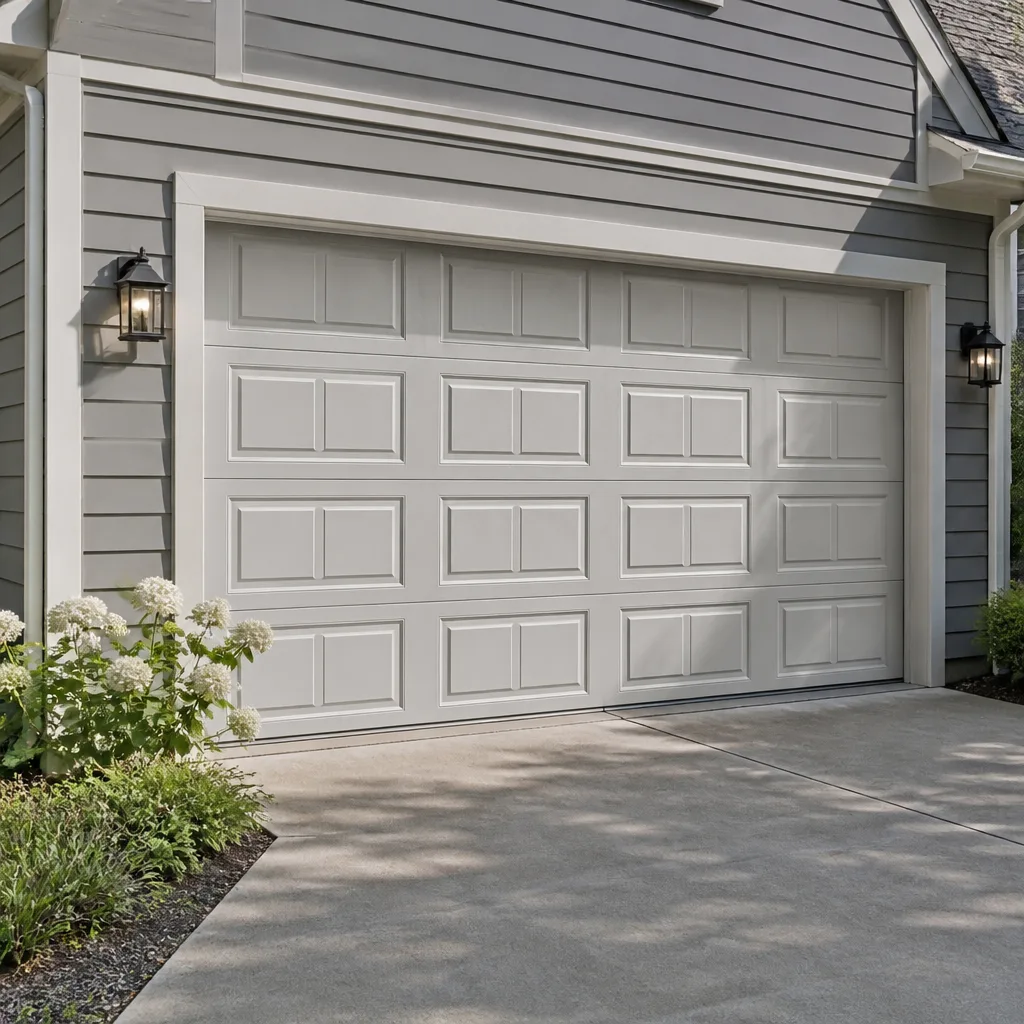 Raised-panel steel
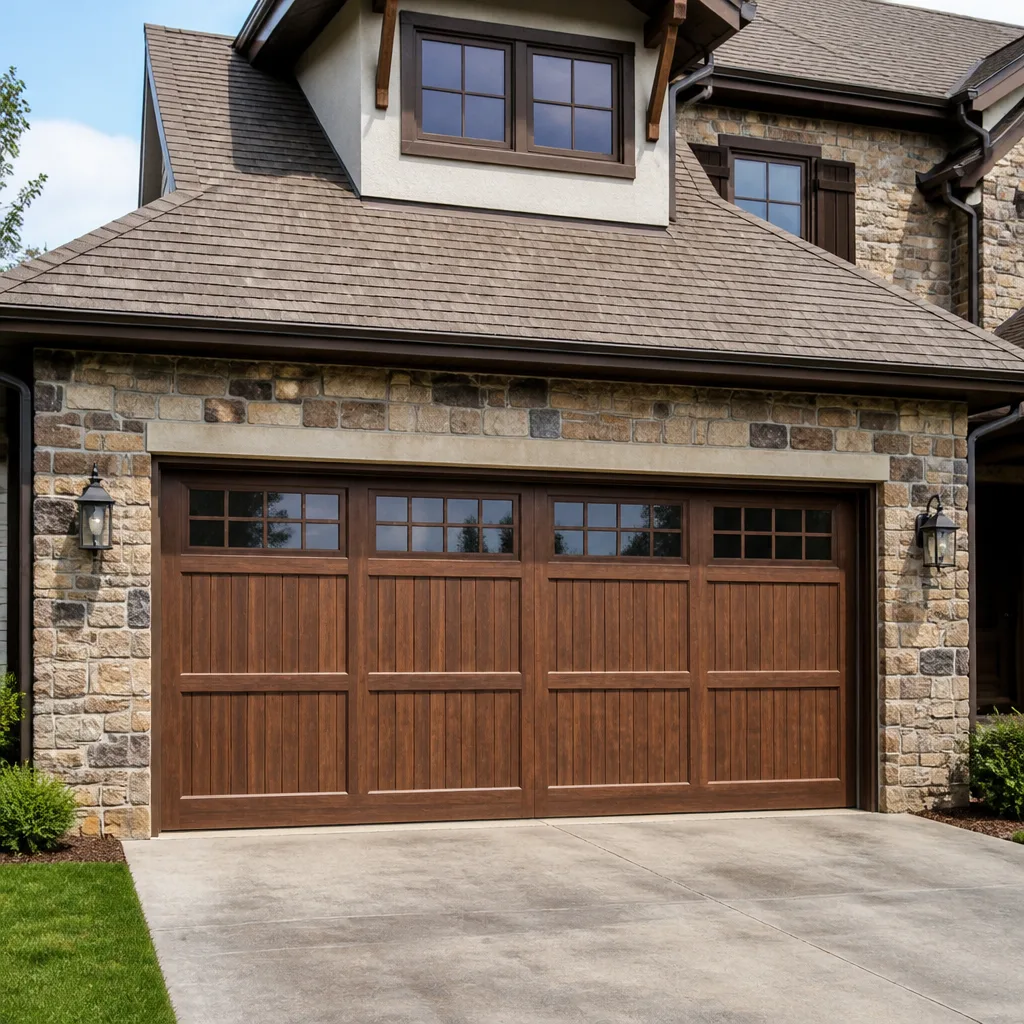 Carriage house
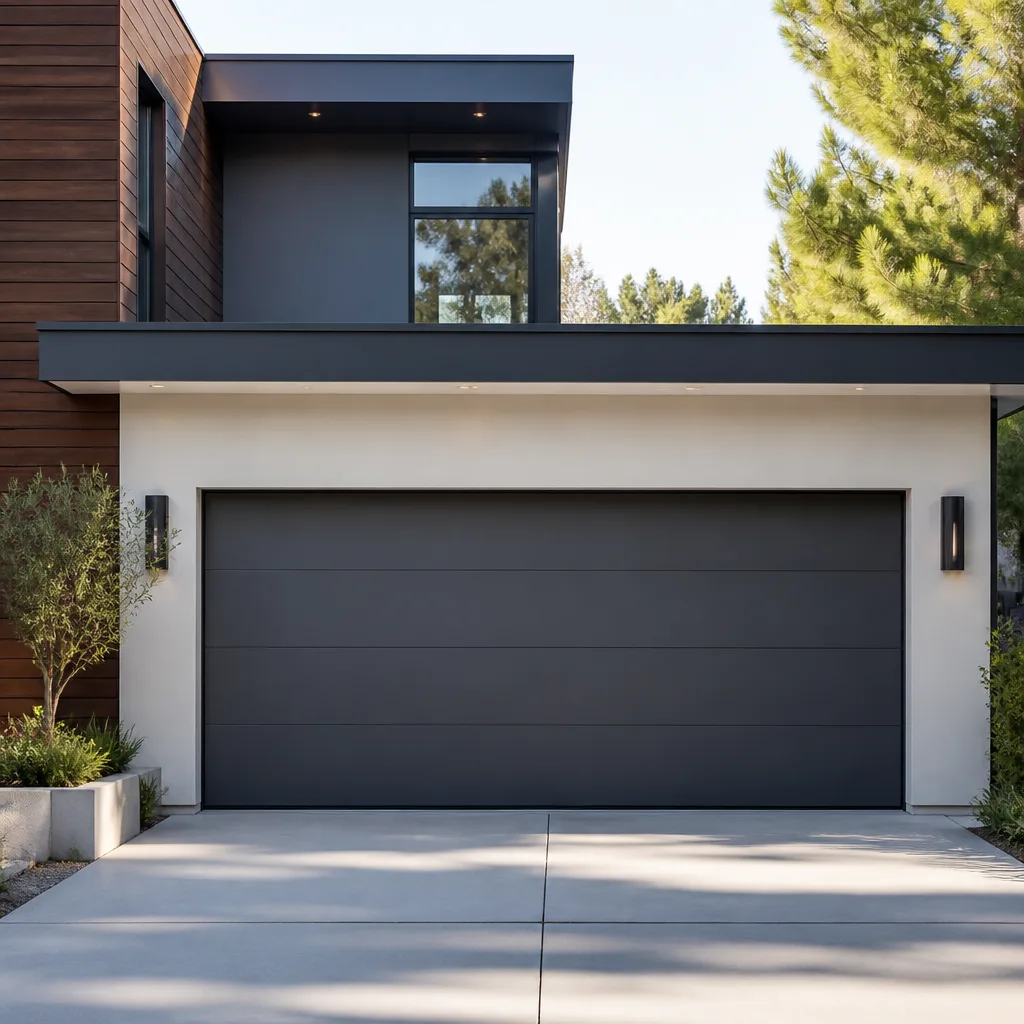 Modern flush
 Full-view glass
 LiftMaster openers
 Chamberlain openers
Full 25-point door and opener safety check with every visit - springs, cables, rollers, tracks, and your LiftMaster or Chamberlain opener included
You get a price before we start. It does not change when the truck arrives.
Get your free estimateGarage Door Emergency Preparedness Guide for Gilroy Homes
Here’s a fact most Gilroy homeowners don’t learn until it’s too late: the average garage door opener has a manual release mechanism that roughly 7 out of 10 people have never used. They discover this during a power outage, with the car inside the garage and a morning commute already slipping away. This guide fixes that. You’ll learn exactly what to do when the door won’t open, when it won’t stay closed, when an earthquake has rattled your tracks, and how to separate a true emergency from an inconvenience. Whether you live off Mantelli Drive or back toward Uvas Creek, the steps here apply directly to how Gilroy homes are built and the specific opener brands most of them use.
Quick Answer
A garage door emergency in Gilroy breaks down into two problems: the door won’t move (mechanical failure or power loss), or the door moves but shouldn’t (spring failure, track damage, post-earthquake shift). For the first, every opener has a manual release cord that disengages the motor and lets you lift the door by hand. For the second, stop using the door immediately, pull the release cord if safe, and call a professional before the door causes injury or further damage to your track system.
Styles & brands we work with
- Raised-panel steel
- Carriage house
- Modern flush
- Full-view glass
- LiftMaster openers
- Chamberlain openers
Table of Contents
- What to Do When the Power Goes Out in Gilroy
- How to Manually Release Your Opener (by Brand)
- Earthquake Protocol: Checking Your Door Before You Operate It
- The ‘Door Won’t Stay Up’ Emergency: Broken Spring Scenarios
- Assessing Structural Safety After a Storm or Impact
- What to Store Near Your Garage Door (and in What Order)
- Backup Battery Considerations for Gilroy Homes
- Common Mistakes to Avoid
- When to Call a Professional
- Frequently Asked Questions
What to Do When the Power Goes Out in Gilroy
Power outages hit Gilroy differently depending on where you live. Homes near the eastern foothills get hit during high-wind events when PG&E runs its Public Safety Power Shutoff program. Homes in the flatlands lose power during storm surges or transformer failures. Either way, the result is the same: your opener is dead and your door isn’t moving.
The sequence that matters looks like this:
- Don’t panic and don’t force the opener. Pressing the wall button or remote repeatedly does nothing except frustrate you. The opener has no power and no amount of button-pressing changes that.
- Locate the manual release cord. It’s the red rope hanging from the trolley mechanism on the opener rail, usually within arm’s reach above your car.
- Pull the rope down and toward the door. You’ll hear a click as the trolley disengages from the chain or belt.
- Lift the door by hand. One smooth motion, using the handle or the bottom edge. A balanced door lifts with moderate effort and stays up on its own.
- Keep the door closed when you leave. If you’re driving out, close the door manually behind you. An open garage door in Gilroy is an invitation to theft, and we’ve seen increase in property crime reports during extended outages.
Here’s what trips people up: the door feels heavier than expected. That’s normal. You’re lifting the full weight of the door without motor assist. If the door feels extremely heavy, or won’t stay up when you lift it halfway, that’s not a power outage problem, that’s a spring failure. Stop lifting and call for service. Forcing a door with a broken spring puts you at risk of the door crashing down.
We work on the brand you already have, and the manual release procedure is the same across LiftMaster, Chamberlain, Genie, and Craftsman openers. The hardware differs slightly, but the red cord is the red cord.
How to Manually Release Your Opener (by Brand)
Most Gilroy garages have one of four opener brands installed: LiftMaster, Chamberlain, Genie, or Craftsman. The manual release works the same way on all of them, but the exact location of the release and what happens when you pull it varies slightly. Here’s the breakdown.
LiftMaster and Chamberlain
LiftMaster and Chamberlain are the same company, and their openers share an identical release mechanism. You’ll find the red cord hanging from the trolley, which rides the rail above the door. Pull down and toward the opener motor (the direction the door would travel when closing) to disengage. You’ll hear a definitive click. The door is now in manual mode.
What can go wrong: on older units with chain drives, the release cord can be stiff from years of heat cycling in a Gilroy garage. If the cord doesn’t budge, don’t yank harder. The internal release lever may be corroded. This is a 10-minute fix for a technician, not a DIY project.
Genie
Genie openers use a slightly different trolley design. The red release cord hangs from the trolley with a plastic handle. Pull straight down until you feel the trolley disengage, then lift the door. On newer Genie models, the release handle is sometimes yellow instead of red. The function is identical.
What can go wrong: Genie’s screw-drive openers (common in 1990s and early 2000s Gilroy homes) have a release mechanism that can read as “stuck” if the screw thread has worn. Pulling at an angle helps. If the handle snaps off in your hand, you’re looking at a replacement part, but the door can still be manually opened by pulling the trolley release lever directly.
Craftsman
Craftsman openers are rebadged Chamberlain and LiftMaster units, so the release procedure is exactly the same: find the red cord, pull down and toward the motor. Craftsman openers are massively common in Gilroy homes built between 1995 and 2015.
What can go wrong: Craftsman units from the late 2000s have a plastic release lever inside the trolley that gets brittle over time. If the lever breaks, the cord pulls free with no effect. The door is locked in place. This requires a trolley replacement, which most homeowners can’t do themselves and shouldn’t try.
Important: re-engaging the opener after a power outage matters. Pull the release cord again while the door is fully closed to snap the trolley back into the carriage. You’ll hear another click. When the power returns, the opener works normally. If you don’t re-engage properly, the opener motor runs but the door doesn’t move, and homeowners think the opener failed. It didn’t. It’s just not reconnected.
If you need help with any of these openers, our Garage Door Opener Repair in Freedom team handles them daily. We’ve seen every release mechanism failure there is, and we have the parts on hand for all four brands.
Earthquake Protocol: Checking Your Door Before You Operate It
Gilroy sits on the Calaveras Fault, and earthquakes are not hypothetical here. When the ground shakes, garage doors are among the first household components to shift. The issue is that most homeowners immediately test the door with the opener, which is exactly the wrong move after a seismic event – something covered in detail in our Garage Door Permits, Codes & Inspections in CA: What You Need to Know.
Here’s the sequence we recommend after any earthquake big enough to feel:
- Don’t use the opener first. The opener is a motor pulling on a track system. If the tracks shifted, the opener forces the door through misaligned rails, causing roller damage, bent tracks, or pulling the door off its hinges entirely.
- Do a visual inspection from inside the garage. Look at the vertical tracks on both sides. Check for visible gaps between the track and the wall. Look at the horizontal tracks near the ceiling for any twist or sag.
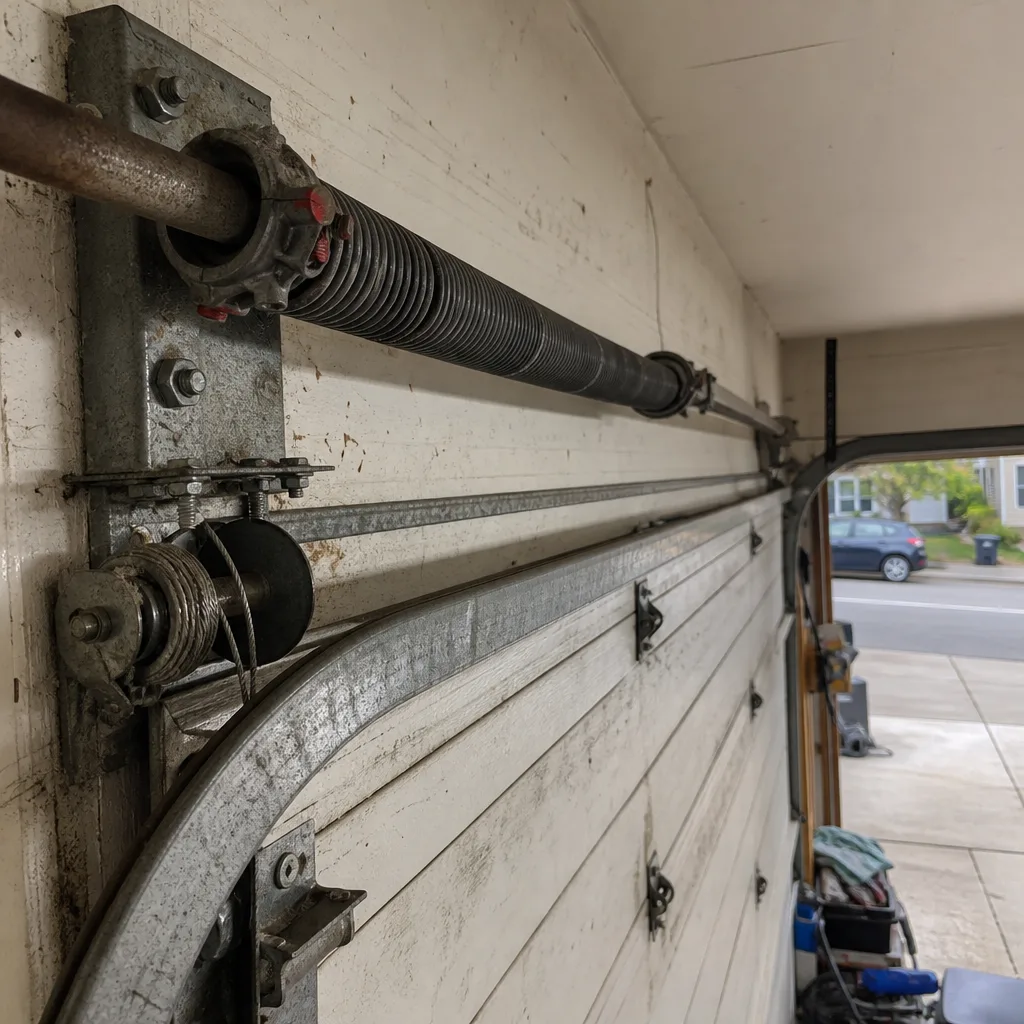
- Check the spring line. The torsion spring above the door should be straight. If it’s bowed or looks like a stretched Slinky, the spring has shifted and may be compromised.
- Check the door’s relationship to the ground. Walk to the outside and see if the door sits flush against the ground when closed. Gaps at one corner mean the door frame or track moved.
- If everything looks straight, operate the door manually first. Pull the release cord and lift the door by hand. Any grinding, catching, or resistance means the track shifted in a way you can’t see. Lower the door gently and call for service.
- Only after the manual check passes should you re-engage and use the opener.
We’ve inspected doors in Gilroy after moderate quakes where the visual check passed but the track had shifted by a quarter inch. The door operated, but the rollers were wearing against the track edge, and the door was on track to fail within months. The fix was simple in the early stage. The same shift ignored for a year becomes a track replacement.
The key principle: after an earthquake, the door is a structural system, not just an opener problem. Treat it like you’d treat a cracked foundation: inspect first, operate second.
The ‘Door Won’t Stay Up’ Emergency: Broken Spring Scenarios
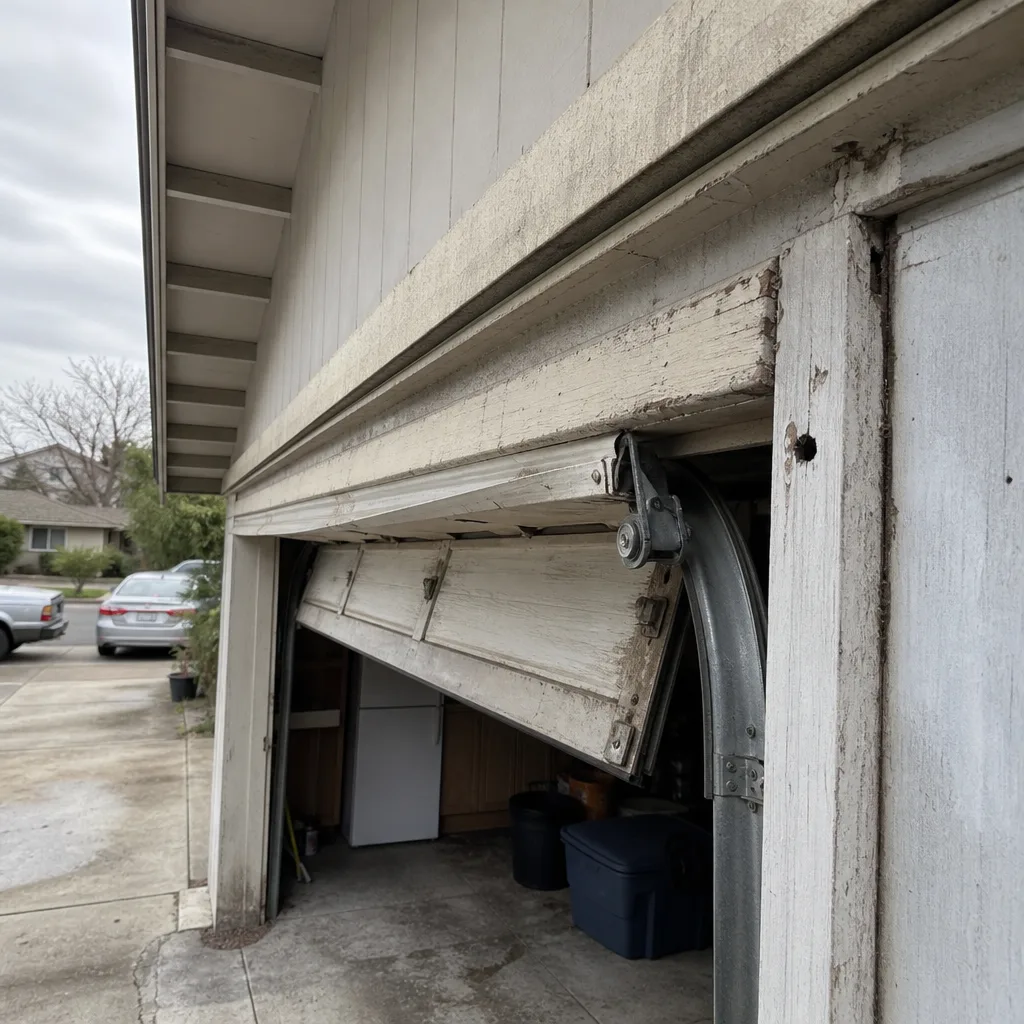
Here’s a scenario we hear from Gilroy homeowners all the time: the garage door opens, but when it reaches the halfway point, it slams back down. Sometimes it works fine one minute and fails the next. This is a broken torsion spring, and it’s the most common mechanical emergency in any garage door system.
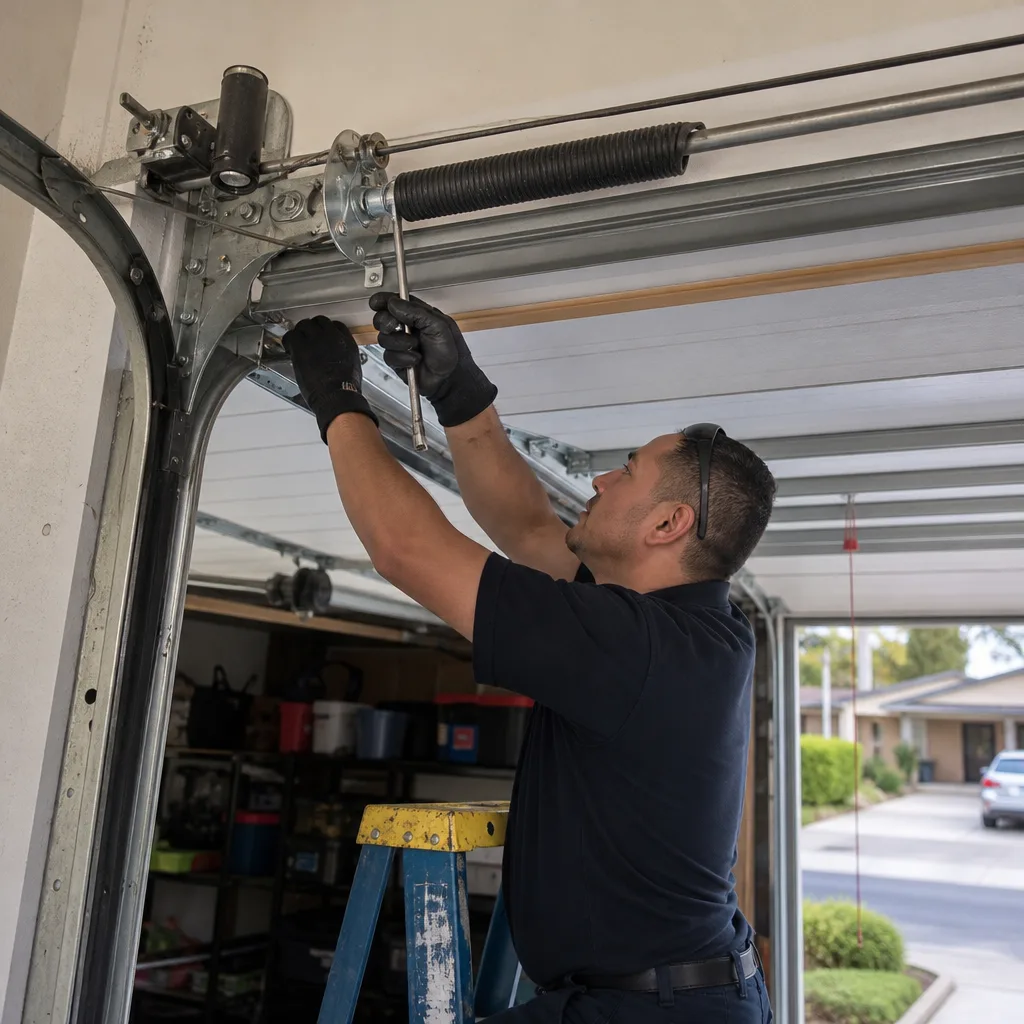
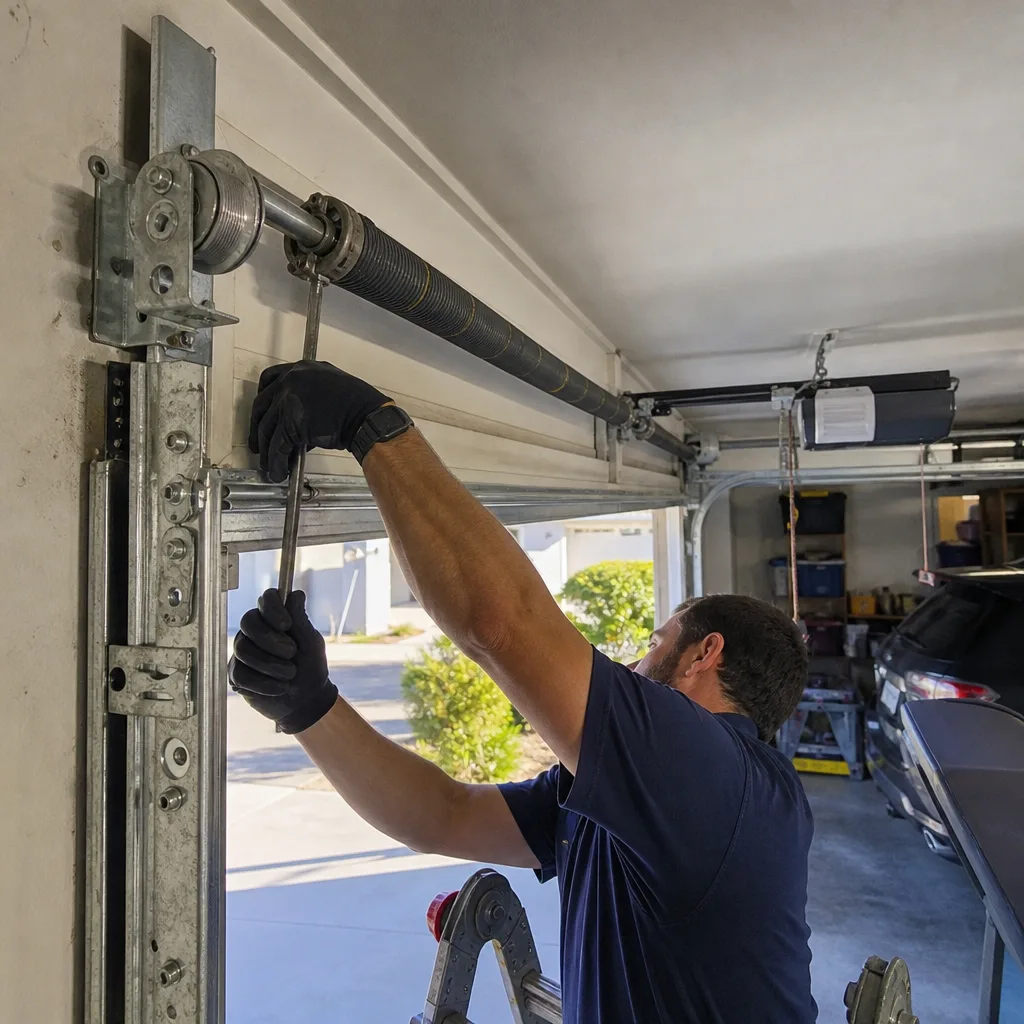
What’s happening: your door has one or two torsion springs mounted above the door opening. These springs counterbalance the door’s weight, which can be 150 to 250 pounds depending on the door material. Steel doors from Clopay weigh less than custom wood doors from Amarr, but either way, the spring does the heavy lifting.
When a spring breaks, you’ll often hear it: a loud bang like a gunshot, typically in the early morning when the garage is cold. Gilroy’s temperature swings between summer highs and fall lows create metal fatigue cycles that eventually cause every spring to fail. Springs have a service life rated in cycles, usually 10,000 openings. Most homeowners hit that number in 7 to 12 years.
What to do right now:
- Stop using the door. The opener motor is now lifting dead weight, which it wasn’t designed to do. Continued use burns out the opener motor and risks snapping the belt or chain.
- If the door is open, do not leave it open overnight. An open garage in Gilroy is a property crime risk. Lower it manually if you can do so safely, with two people controlling the descent.
- If the door is closed and you need your car, do not try to open the door yourself. The door is extremely heavy without spring assist, and lifting it by hand puts you under 200 pounds of uncontrolled weight.
- Call for service. Mention that the spring broke. A technician who knows it’s a spring job comes prepared with the right replacement.
This is where the full-service scope matters. Some Gilroy companies only do springs. Others only do openers. From a broken spring to a brand-new door, our team handles the full spectrum, and we tell you honestly when a repair makes sense versus when replacement is the smarter call. Repair or replace, we’ll tell you which one actually makes sense for your situation and your budget.
One more thing: if one spring broke, the other is probably near the end of its life. Springs wear together. Replacing both at once costs a bit more now but saves you a second service call within a year. Most technicians in Gilroy recommend this, and we agree.
Assessing Structural Safety After a Storm or Impact
Storms don’t just knock out power. They knock debris into doors. In Gilroy’s windier stretches, particularly near the western hills and along Santa Teresa Boulevard, tree branches and fence slats become projectiles. Your door takes the hit and keeps standing, but “standing” and “safe to operate” are different things.
After any impact to the door panel, do this before using the door:
- Check each panel section for dents or cracks. Small dents are cosmetic. Cracks or punctures through the panel are structural. A cracked panel can buckle under its own weight when the door cycles, sending the door off track.
- Check the door edge alignment. Stand inside and look at where the door meets the vertical track on both sides. Both sides should have the same clearance. A difference of even half an inch means the door shifted in the track.
- Listen during the next full cycle. If you decide to operate the door, stand inside and listen. Grinding, scraping, or a rhythmic thumping that matches the door movement means a roller is damaged or a panel is bent in a way you can’t see.
- Watch the door during travel. A door that wobbles side to side as it moves has track or roller damage. Stop using it and call for service.
Water is a separate issue. Some Gilroy homes near Uvas Creek see garage flooding during heavy rain years. If water has risen above the bottom seal, check the bottom panel for water absorption. Wood and fiberboard panels soak water and swell, throwing off the door’s balance. The swelling may not be visible for a week.
If water got into the opener motor housing, the opener may work fine for weeks and then fail. Moisture and circuit boards are a slow death. If you suspect water intrusion, have a technician open the housing and inspect. This is the kind of assessment that most handymen skip and most brand-specific technicians don’t.
After any storm-related impact, if the door passes your visual check but you still feel uneasy, call our Garage Door Repair in Freedom team for an inspection. We’ll tell you honestly whether it’s safe to keep using or whether something needs attention.
What to Store Near Your Garage Door (and in What Order)
During an emergency, you don’t have time to search. The things that matter need to be reachable in the dark, with one hand, without moving a car. Here’s what to keep near your garage door, prioritized by how urgently you’ll need it.
- Manual release cord: know where it is. This isn’t a stored item, but it is the first thing you’ll reach for in a power outage. Walk out to the garage right now, find the red cord, and practice pulling it twice so your hands remember the motion.
- Emergency contact card. A small index card taped inside the door jamb with the phone number of a garage door company that services Gilroy. Writing it on the wall works too. When the door is stuck and your phone is inside the house, you’ll be glad it’s there. Our number: (833) 593-6706.
- Flashlight or headlamp. Garage lighting depends on the same power grid that just failed. A headlamp is better than a flashlight because it leaves both hands free for the release cord and door handle.
- Work gloves. A cheap pair of leather gloves near the door protects your hands when lifting a cold steel door edge or grabbing a track that may have sharp spots.
- Backup battery, if your opener supports one. LiftMaster and Chamberlain openers with myQ often support battery backup units. More on this below.
- A printed copy of your opener model number. When you call for service, the technician wants to know what opener you have. The model number is printed on the motor housing, but it’s easier to read a card than to balance on a stepladder in the dark.
Keep these items in a small bin or on a shelf next to the garage door track on the side away from where the car parks. The car is likely parked against the other wall, so the bin stays accessible.
For Gilroy specifically, this matters because of earthquake season. You may not need the kit for years, and then you’ll need it in the middle of a shake. The card should be there, dry, and legible.
Backup Battery Considerations for Gilroy Homes
Power outages in Gilroy are rarely long. PG&E crews work fast, and most outages last a few hours. But a few hours of “no garage door” is exactly when you need the door to work. That’s why battery backup units exist, and why most homeowners don’t have them.
LiftMaster and Chamberlain make the most common battery backup systems, typically sold as add-on units for their belt-drive and chain-drive openers. The backup battery installs inside the opener housing or on the wall near the unit, and it provides enough power for roughly 20 to 50 open-and-close cycles after the grid fails. That’s more than enough for a day of PG&E outage, but not enough for a multi-day earthquake scenario.
Important considerations:
- Battery backups only work if the opener is designed for them. Genie and Craftsman openers have fewer compatibility options. Check your opener model against the battery spec before buying one.
- Battery age matters. Most backup batteries last two to three years. If you installed one in 2022 and haven’t thought about it since, test it: unplug the opener and operate the door. If it doesn’t move, the battery is dead.
- The smart-home angle may be your backup’s backup. If your opener has myQ connectivity through LiftMaster or Chamberlain and your home still has cell service, you can operate the door from your phone during an outage if the battery backup has charge. This is a feature most Gilroy homeowners don’t realize they already own.
- Using the opener after a suspected track shift. The opener pulls with enough force to bend track brackets and shear roller stems. After an earthquake or impact, always check manually first. Forcing it makes a $200 track adjustment into a $900 track replacement.
- Yanking the manual release cord at an angle. The release cord is designed to pull down and toward the motor. Pulling it sideways bends the release lever. Pulling it too hard without the downward angle can snap the plastic handle. Be firm, follow the angle, and stop when you feel the click.
- Ignoring a broken spring until the weekend. A broken spring means the opener is now lifting dead weight. Every cycle you run in that condition wears the opener motor and risks the door falling unexpectedly. In Gilroy’s summer heat, the added strain kills opener motors fast.
- Leaving the garage door in manual mode after reconnecting power. The door sits disconnected from the trolley, which means anyone can lift it from outside. Re-engage the release after the power returns, or lock the door manually.
- DIY-ing a spring replacement. Torsion springs are under hundreds of pounds of tension. A spring that releases while being wound can break bones or worse. This is the one garage door repair where we always, without exception, recommend a trained technician.
- Storing the emergency kit on a top shelf across the garage. When the power is out and your car is in the way, that shelf is unreachable. Keep what you need within arm’s reach of the door track.
- Waiting until the earthquake to learn where the release cord is. It’s a red or yellow rope hanging from the opener rail. If you don’t know where yours is, walk out now and find it. Under stress, people fumble for things they’ve never touched. Your first earthquake drill should be pulling that cord.
You can also add a battery backup to an existing opener you already have. It’s usually a 30-minute install for a technician. Given Gilroy’s earthquake risk and PG&E’s public safety power shutoffs, this is one of those “buy it before you need it” items.
Common Mistakes to Avoid
When to Call a Professional
Some garage door problems are safe to assess yourself. A door that won’t open because the power is out and the manual release works fine? You’ve handled it. A door that operates normally after you manually checked it post-earthquake? You’re probably fine.
Call a professional when the door won’t stay up, when the spring is visibly broken, when the track is bent or pulled loose from the wall, when a panel is cracked through, when the opener motor runs but the door doesn’t move, or when you hear grinding during travel. These are structural and mechanical failures that get worse with continued use.
Garage Door Service Gilroy offers free estimates in Gilroy, and we’re the Garage Door Service Gilroy home team. Call (833) 593-6706, describe what you’re seeing, and we’ll help you figure out what’s urgent and what can wait.
Frequently Asked Questions
Pull the manual release cord, usually red, hanging from the opener rail above your car. Pull it down and toward the motor, then lift the door by hand. The procedure works the same on LiftMaster, Chamberlain, Genie, and Craftsman openers. If the door feels extremely heavy or won’t stay up, you have a spring problem, not a power problem. Call us at (833) 593-6706 for a free estimate.
That’s a broken torsion spring. The spring that counterbalances the door’s weight has snapped, and the opener is now lifting dead weight. Stop using the door immediately and call for service. The same door can crash down unexpectedly, and continued use damages the opener motor.
No. Torsion springs are wound under hundreds of pounds of tension, and they release that energy violently when mishandled. This is the most dangerous repair in any home, full stop. Hire a trained technician who works on springs daily for Gilroy homeowners.
Emergency spring replacement in Gilroy typically runs $180 to $340 for a standard single door, including parts and labor. Track repairs run $150 to $300 depending on the damage. Opener replacements run $350 to $600 including installation. We quote the exact price before any work starts. Call (833) 593-6706 for a free estimate.
No. We quote the repair price based on the description you give us over the phone, and that price holds unless we find something structural that wasn’t visible. If we find additional damage, we stop and discuss it with you before doing anything else. The price is always quoted and agreed before any work starts.
Don’t operate it with the opener. Check the tracks on both sides for visible shifts, check the spring for bowing, and run the door manually once using the release cord. If anything looks off or the door binds, leave it alone and call us. A $150 track adjustment now is cheaper than a $900 track replacement later.
Yes. We work on eight major garage door brands including Wayne Dalton, Craftsman, Clopay, Amarr, Genie, LiftMaster, and Chamberlain. We work on the brand you already have, not a generic substitute. Your opener, your system, our specialty.
The Bottom Line
Garage door emergencies in Gilroy come in two shapes: the door won’t move when it should, or the door moves when it shouldn’t. Power outages have a simple solution: pull the red cord, lift by hand, and carry on with your day. Spring failures, track shifts, and post-earthquake damage have one solution: stop using the door and call someone who fixes these problems daily. The best emergency plan is sixty seconds of preparation now: find your release cord, pull it once so your hands learn the motion, and write our number, (833) 593-6706, somewhere near the door. When the power is out and the car is trapped, you’ll know exactly what to do.
Written by the team at Garage Door Service Gilroy, serving Gilroy since 2018.
See the difference
 Before
 After
 Before
 After
 Before
 After