
Last updated November 2, 2026
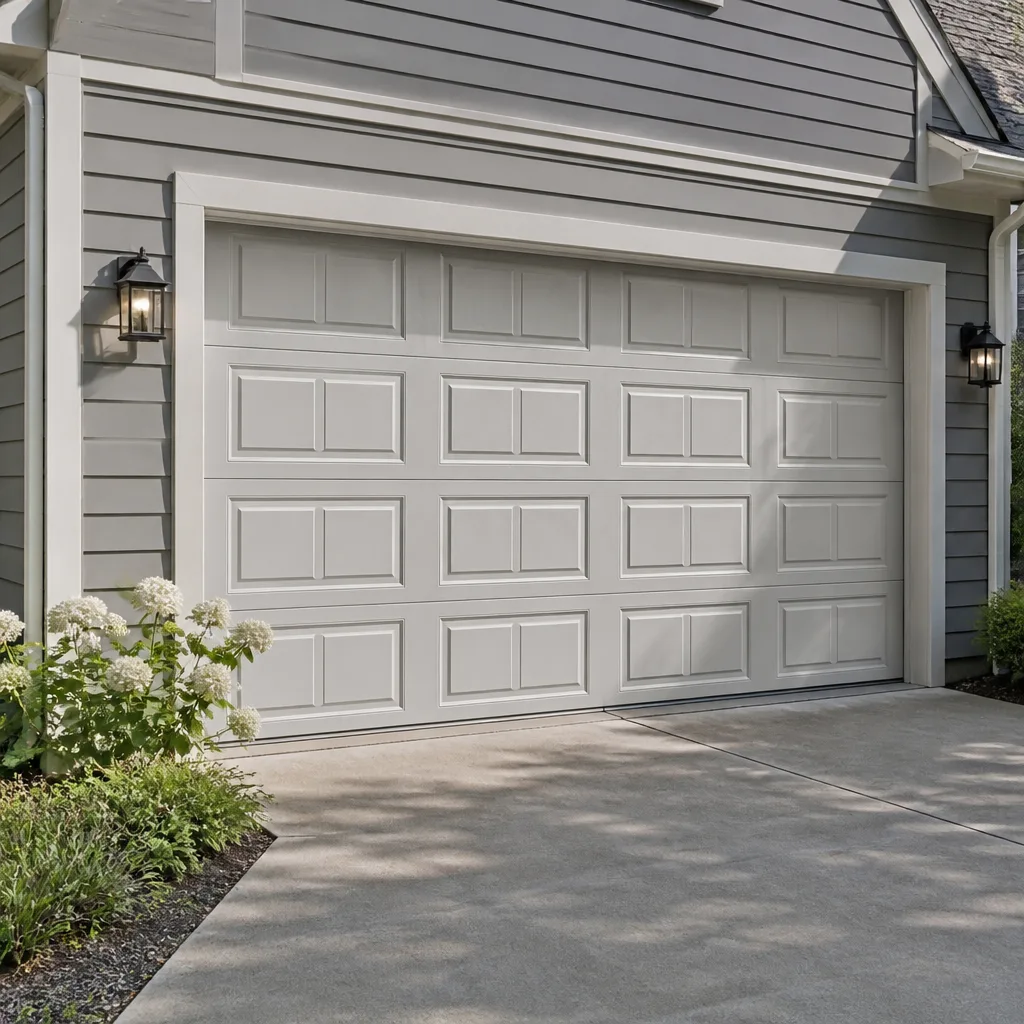 Raised-panel steel
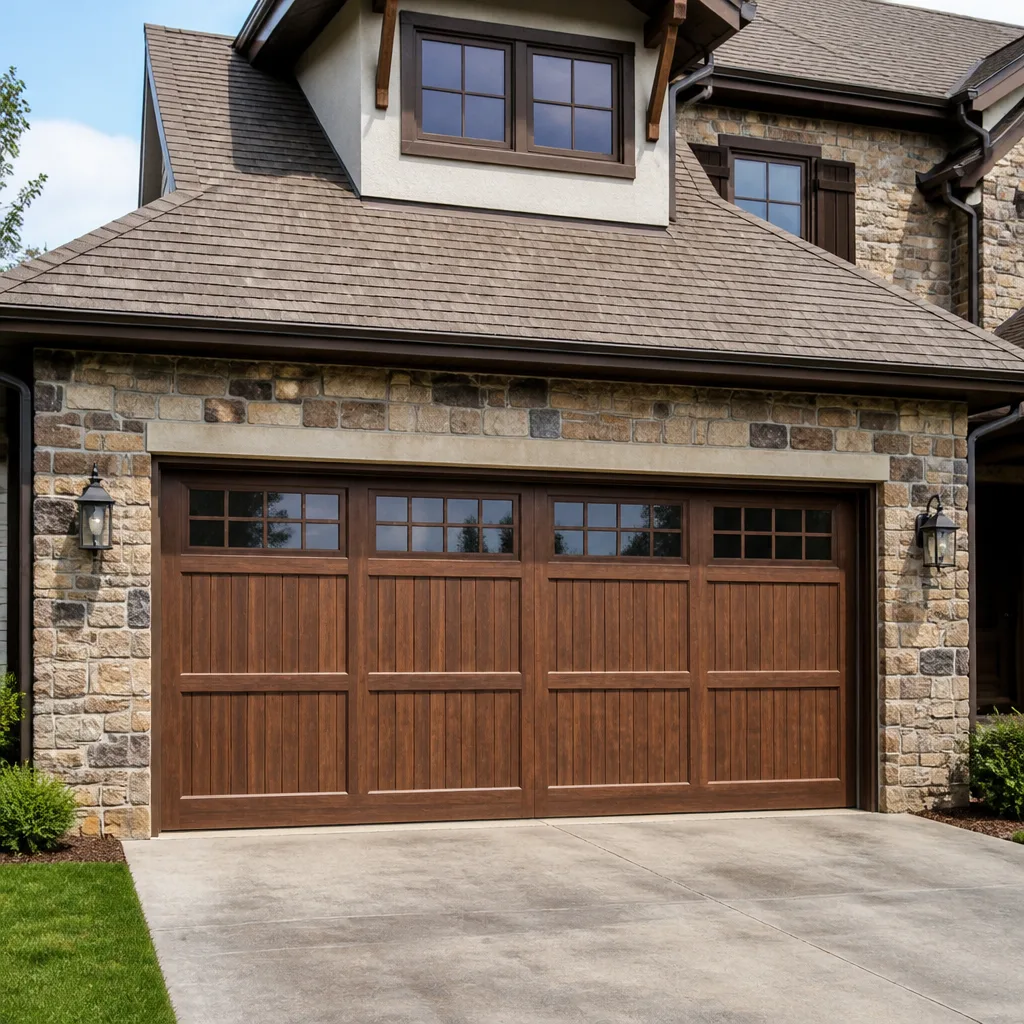 Carriage house
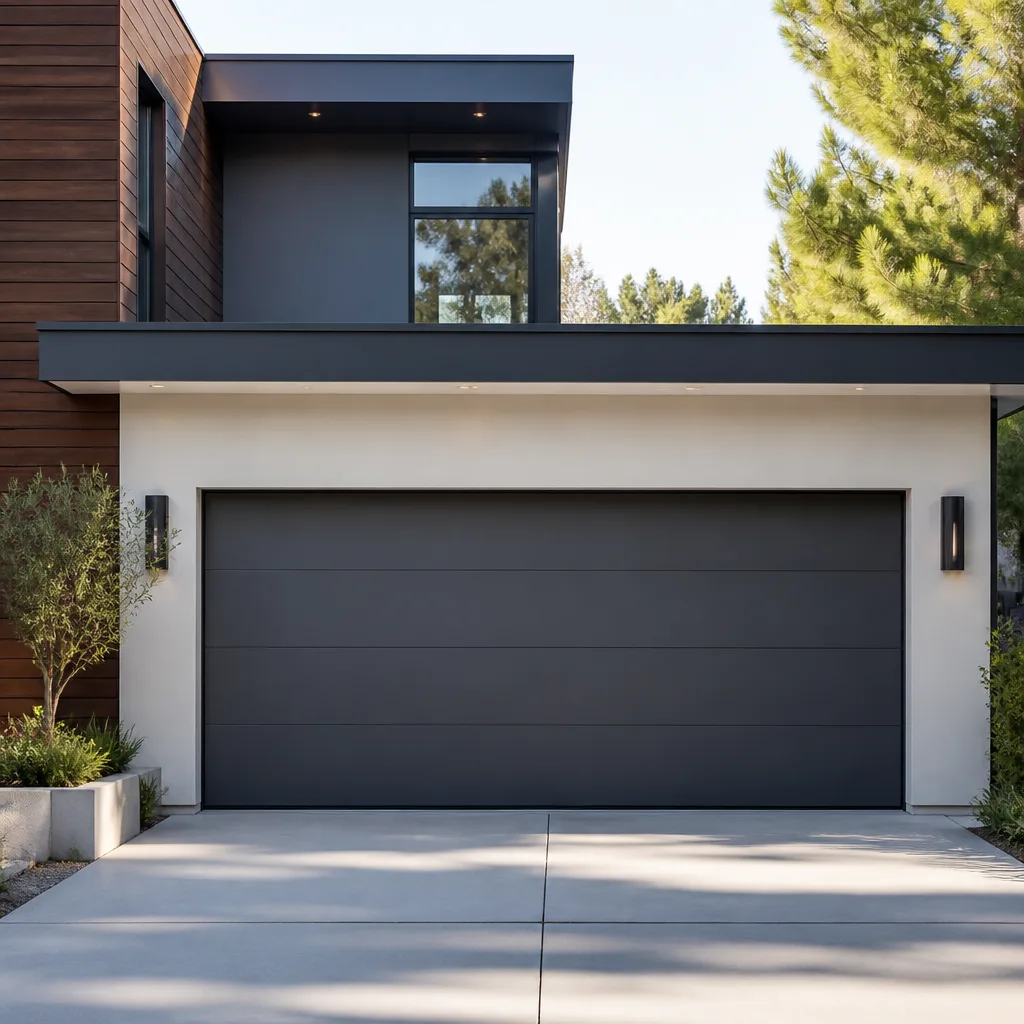 Modern flush
 Full-view glass
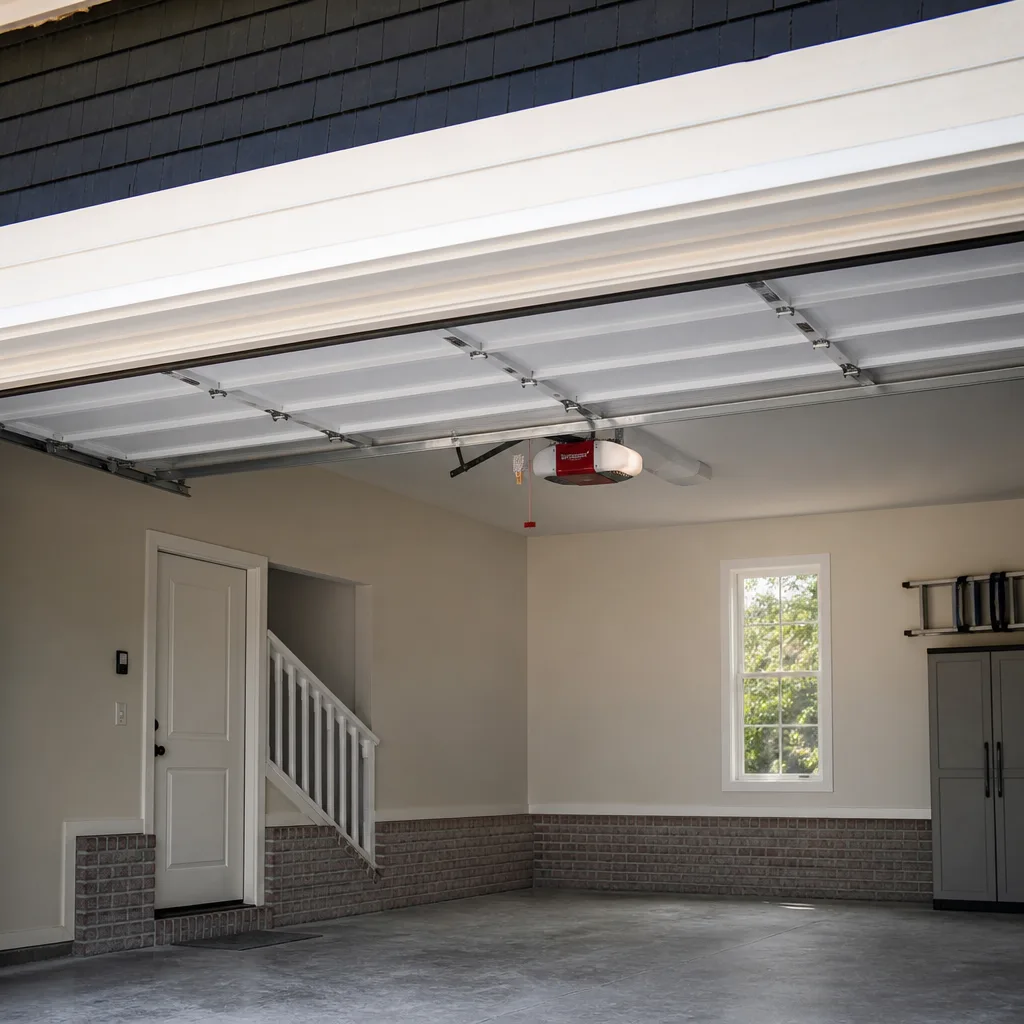 LiftMaster openers
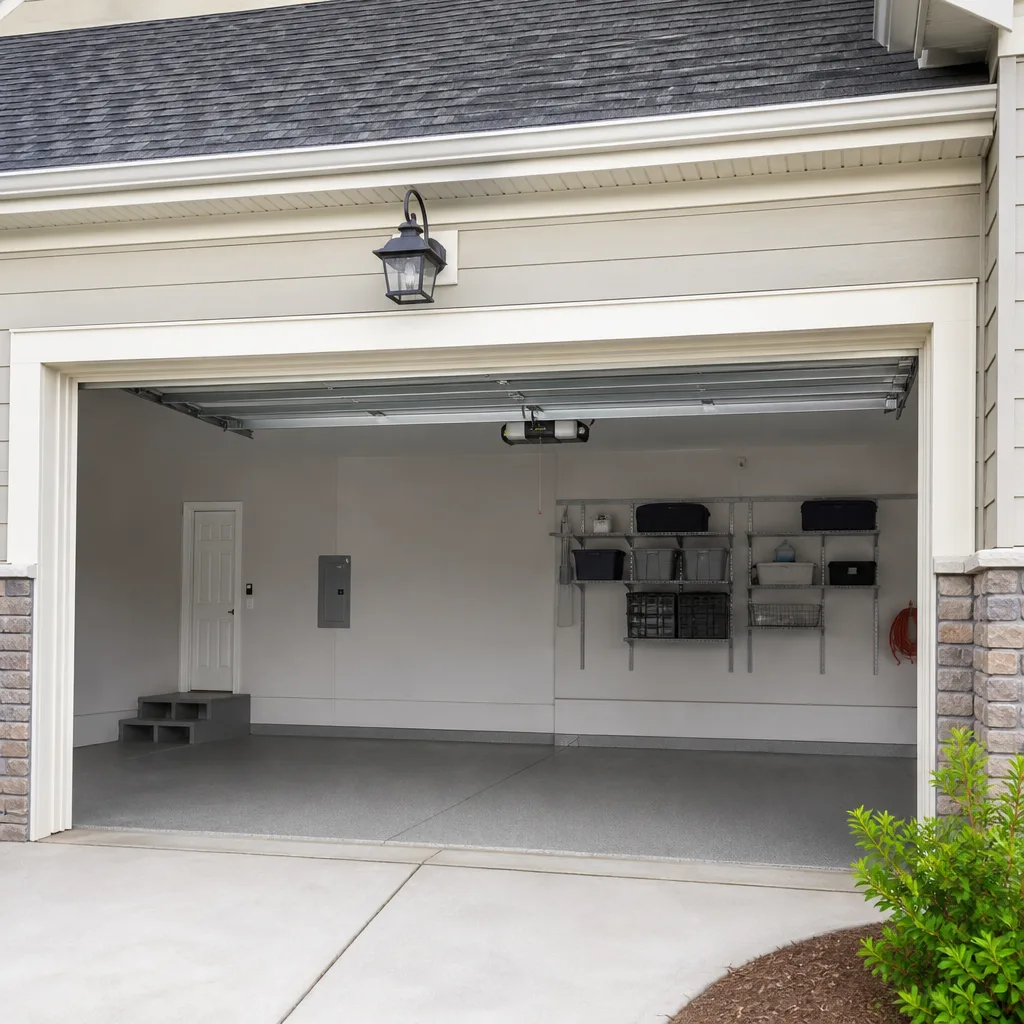 Chamberlain openers
Full 25-point door and opener safety check with every visit - springs, cables, rollers, tracks, and your LiftMaster or Chamberlain opener included
You get a price before we start. It does not change when the truck arrives.
Get your free estimateGarage Door Permits, Codes & Inspections in CA: What You Need to Know
California’s 2023 Title 24 energy compliance rules quietly changed what’s required for new garage door installations in attached garages, and most homeowners in Gilroy never find out until a home sale stalls or a city inspector flags the work. A garage door replacement feels like a bolt-off, bolt-on job, but in many California jurisdictions it sits in a gray zone where the permit requirement depends on factors few contractors bother to explain. This guide walks through exactly when a permit is required, what Title 24 means for your specific install, what inspectors actually check, and how unpermitted work surfaces during escrow. You’ll learn the rules that apply to Gilroy, Freedom, and the surrounding Santa Clara and Santa Cruz County jurisdictions, plus the HOA overlays that add another layer of requirements before you can even pick a color.
Styles & brands we work with
- Raised-panel steel
- Carriage house
- Modern flush
- Full-view glass
- LiftMaster openers
- Chamberlain openers
Quick Answer
Garage door replacement in California may require a permit depending on your jurisdiction, whether the garage is attached or detached, and whether structural or electrical work is involved. In most Santa Clara County cities including Gilroy, a like-for-like door swap in a detached garage often needs no permit, but new doors in attached garages trigger Title 24 energy code compliance and typically require a permit with inspection. The safest path is to check with your city’s building department before any work starts, because the cost of fixing an unpermitted install later, especially during a home sale, runs far higher than the permit fee itself. For a deeper look at what can go wrong, see our Garage Door Repair Troubleshooting: Common Problems and How to Fix Them.
Table of Contents
- When a Garage Door Permit Is Required in California
- Title 24 Energy Code: What Changed in 2023 and Why It Applies to Garage Doors
- How Gilroy, Freedom and Surrounding Jurisdictions Apply the Rules Differently
- What a City Inspector Actually Checks During a Garage Door Inspection
- How an Unpermitted Garage Door Replacement Surfaces During a Home Sale
- HOA Requirements in Gilroy and Freedom: Material, Color and Design Rules
- Common Mistakes to Avoid
- When to Call a Professional
- Frequently Asked Questions
- The Bottom Line
When a Garage Door Permit Is Required in California
California building code doesn’t have a single statewide answer on garage door permits, because enforcement happens at the city and county level. What the state does define is the California Residential Code (CRC), which sets minimum standards that local jurisdictions can tighten but not loosen. In practice, most cities in Santa Clara County and Santa Cruz County follow similar patterns, with one big variable: attached versus detached garages.
A like-for-like door replacement, meaning you swap out an old sectional door for a new one of the same type, opening size and operating style, without touching the framing or electrical, is the most common scenario. In many jurisdictions, this does not require a permit when the garage is detached from the house. The reasoning is that a detached garage doesn’t affect the home’s thermal envelope, and a door swap doesn’t alter the structure’s load path.
But the minute you change the opening size, add windows where there were none, convert a swing-out door to a roll-up, or replace the framing around the opening, you’re into structural territory. That requires a permit almost everywhere in California, including Gilroy. The same applies if you’re installing a new opener and running a dedicated electrical circuit, which puts you into the California Electrical Code.
Here’s the breakdown most homeowners in our service area ask about:
- Detached garage, like-for-like door swap: No permit in most Santa Clara County and Santa Cruz County jurisdictions.
- Attached garage, like-for-like door swap: Permit often required, because Title 24 energy compliance applies to the building envelope.
- Any change to the opening dimensions or framing: Permit required, structural review involved.
- New electrical circuit for an opener: Permit required, electrical inspection included.
- New door in a brand-new garage or major remodel: Covered under the main building permit, not a separate door permit.
We work on the brand you already have, whether that’s a Clopay, Amarr, Wayne Dalton, or Craftsman, and we’ve seen enough permit cases across Garage Door Service Gilroy home territory to know that the attached garage rule is the one that surprises people most. Homeowners in Gilroy’s older neighborhoods, where attached garages dominate, are far more likely to need a permit than someone in a rural Santa Cruz County property with a standalone garage.
Title 24 Energy Code: What Changed in 2023 and Why It Applies to Garage Doors
California’s 2023 Title 24 update tightened energy efficiency standards for residential buildings, and garage doors on attached garages got pulled deeper into those requirements than ever before. The logic is straightforward: an attached garage shares walls, and often ceiling space, with the conditioned living area of the home. A poorly insulated garage door on an attached garage becomes a thermal hole in the building envelope, forcing your HVAC system to work harder.
The 2023 code cycle increased the prescriptive insulation requirement for garage doors in certain climate zones, and it sharpened the air sealing requirements around door perimeters and panel joints. In practical terms, this means that if you’re installing a new door on an attached garage in Gilroy, the door you pick needs to meet a minimum R-value, and the installation needs to include proper weatherstripping, threshold seals, and side seals.
What does this look like in real numbers? A standard non-insulated steel door, the kind that’s been bolted onto Garages across California for decades, typically won’t meet the current prescriptive requirement for attached garages in climate zones 3 and 4, which cover much of the Bay Area and Central Coast. You’ll need a door with an insulation core, usually polyurethane or polystyrene, with an R-value of at least R-6 or higher depending on the exact climate zone and whether the garage itself is conditioned space.
Here’s where it gets tricky for homeowners. The energy code applies to the replacement, not just new construction. If you’re doing a full door replacement on an attached garage, the new door must comply with current Title 24 standards, even if the old door was completely uninsulated and leaking air for 30 years. This is why we tell Gilroy homeowners to think carefully before buying the cheapest door online and hiring a handyman to hang it. The door might fit the opening, but it won’t pass an energy code inspection.
A few more Title 24 specifics worth knowing:
- R-value matters: The prescriptive minimum for garage doors in attached garages ranges from R-4.2 to R-18 depending on climate zone and whether the garage is conditioned. Most of Santa Clara County falls in zones that require R-6 or better.
- Air sealing is mandatory: Perimeter weatherstripping, bottom seals, and panel joint seals aren’t optional add-ons under Title 24; they’re code requirements.
- Documentation matters: Inspectors can ask for manufacturer documentation proving the door’s R-value. A receipt that says “insulated door” isn’t enough; you need the spec sheet.
- Solar readiness: California’s solar-ready provisions affect roofing, not garage doors directly, but if you’re doing a broader remodel that touches the garage, the whole scope gets reviewed together.
The practical upshot for anyone planning a new door on an attached garage in Gilroy or Freedom: plan for an insulated door, plan for a permit, and plan for an inspection.
How Gilroy, Freedom and Surrounding Jurisdictions Apply the Rules Differently
Gilroy sits in Santa Clara County, while Freedom is an unincorporated community in Santa Cruz County. The two jurisdictions apply California building codes through different local amendments and enforcement practices, and the differences matter if you’re comparing advice from neighbors across county lines.
Santa Clara County, including the City of Gilroy, has adopted the California Residential Code with local amendments that mostly align with the state baseline. Gilroy’s building department requires permits for structural work and for door replacements on attached garages that trigger Title 24 compliance. In practice, inspectors in Gilroy tend to focus on the same set of energy code items outlined above: insulation value, perimeter sealing, and opener electrical if a new circuit is involved.
Santa Cruz County, which covers Freedom, historically took a more hands-off approach to agricultural and detached structures, but energy code enforcement has caught up in recent years. A detached garage in Freedom with a like-for-like door swap is still likely a no-permit job, but an attached garage door replacement follows the same Title 24 logic as Gilroy. The key difference is process: unincorporated Santa Cruz County routes building permits through the county planning department, and turnarounds can be slower than a city like Gilroy, especially during fire season when inspectors are pulled into defensible space and vegetation management reviews.
One more local factor: wildfire urban interface zones. Parts of the hills east of Gilroy and much of western Santa Cruz County fall into Wildland-Urban Interface (WUI) zones, which add fire-resistance requirements to building materials. Garage doors in WUI zones may need to meet specific fire-rated or ignition-resistant standards, which affects material selection and cost. A wood garage door that would sail through approval in downtown Gilroy could get flagged in a WUI-designated canyon.
Here’s a summary of the two jurisdictions in practice:
- Gilroy (Santa Clara County): Permits required for attached garage door replacements with Title 24 triggers, structural changes, and new opener circuits. City building department processes permits directly.
- Freedom (Santa Cruz County): Similar code requirements for attached garages, but permitting runs through the county. Detached garage like-for-like swaps are typically permit-free.
- WUI overlays: Fire-resistant door materials may be required in hillside and canyon areas in both counties.
- Energy code enforcement: Both jurisdictions enforce Title 24 for attached garage door replacements; Santa Clara County has a longer track record of energy-focused inspections.
If you’re a Freedom homeowner looking at Garage Door Repair in Freedom, the permit question matters for repairs too, not just replacements. A repair that doesn’t change the door’s footprint, insulation, or electrical system is generally outside the permit scope. But the moment a repair becomes a replacement, the rules shift, and that’s the line we help homeowners navigate.
What a City Inspector Actually Checks During a Garage Door Inspection
If your garage door project does require a permit, the inspection is typically scheduled after the door is installed and before the permit is finalized. Knowing what the inspector will look at helps you hold your contractor to a higher standard, and it prevents a failed inspection that costs you another trip-fee day. A Garage Door Repair Maintenance Checklist for Gilroy Homeowners can keep you ahead of issues before they trigger code problems.
- Door type and insulation compliance. The inspector verifies that the installed door matches the spec that was permitted. If your permit application listed an R-6 insulated steel door and the installer hung a non-insulated economy door, the inspection fails on the spot. Bring the manufacturer’s spec sheet.
- Perimeter weatherstripping and air seals. Side seals, top seal, and bottom astragal must be present and properly seated. On an attached garage in Gilroy, the inspector will run a visual check around the full perimeter, looking for gaps. A half-inch daylight gap at the bottom corner fails the air seal requirement.
- Framing integrity and anchorage. The inspector looks at how the door track is fastened to the framing. Lag screws into solid wood or properly sized anchors, correct spacing, and no cracked or split framing members. If you widened the opening, the new header and jamb construction gets a closer structural look.
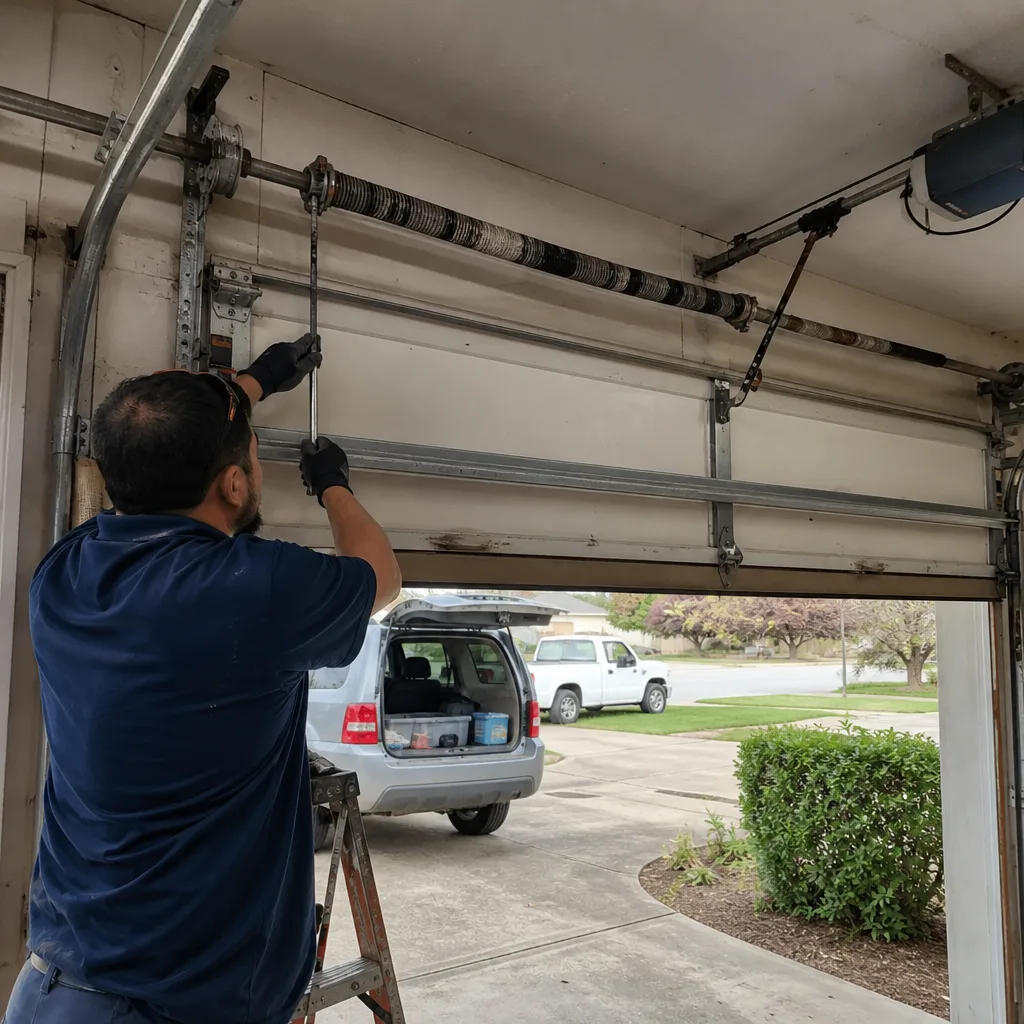
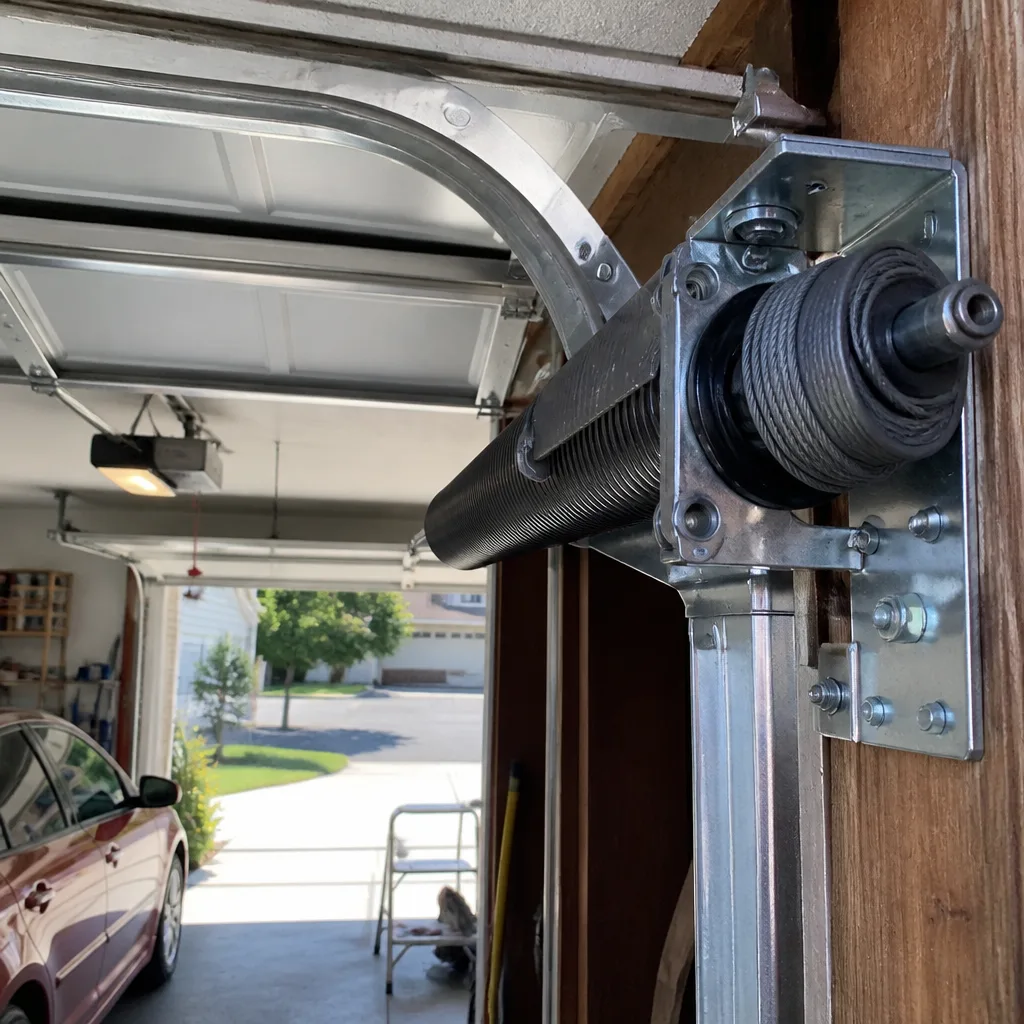
- Opener electrical and safety systems. If an opener is part of the permit scope, the inspector checks the dedicated circuit, the outlet location, and the safety reverse mechanism. The auto-reverse test, where the door reverses on contact with a 2×4 laid flat, is a standard check. Photo-eye sensors at 4 to 6 inches above the floor are mandatory under federal law and get verified. With garage door openers, the tension on the torsion spring and cable system is inherently dangerous work – we don’t recommend homeowners attempt spring adjustments themselves, ever. A failed spring under load can cause serious injury. This is exactly the kind of work where a trained professional who knows LiftMaster, Chamberlain, and Genie systems inside and out is worth the call.
- Title 24 documentation. In jurisdictions enforcing energy code on the door itself, the inspector may ask for the Door Insulation Certificate or manufacturer’s data sheet showing the R-value. Some inspectors accept a photo of the label on the door panel; others want the printed spec.
- Site clean-up and access. This one gets overlooked, but an inspector needs clear access to the door, the opener, the electrical panel if it’s involved, and the attic above the garage if air sealing is being verified. A garage packed with boxes and shelving will slow things down or get the inspection rescheduled.
The point here is that a permitted garage door job isn’t judged on whether the door opens and closes. It’s judged on energy compliance, structural anchoring, electrical safety, and documentation. That’s a higher bar than “looks good from the street.”
How an Unpermitted Garage Door Replacement Surfaces During a Home Sale
Home sales are where unpermitted garage door work gets expensive. It rarely comes up during the install, and it rarely bothers anyone while they’re living in the house. But the moment the house goes on the market, a buyer’s inspector or the title company’s permit history review can flag it.
Here’s the typical sequence. A seller replaced an attached garage door five years ago without a permit. The buyer’s home inspector notices the door is newer than the house and asks for the permit record. The seller doesn’t have one. The buyer’s lender may then require a retroactive permit and inspection before funding, or the buyer asks for a price concession to cover the risk. In a competitive market, sellers sometimes lose the deal entirely over a $300 permit that would have taken two weeks to process at the time of the install.
The remediation costs vary, but they’re never zero:
- Retroactive permit fees: Cities typically charge double or triple the standard permit fee for work done without a permit.
- Inspection and correction costs: If the inspector finds the door doesn’t meet current Title 24 requirements, you’re paying to replace it again, this time with a compliant door.
- Disclosure obligations: In California, sellers are required to disclose unpermitted work on the Transfer Disclosure Statement. Failing to disclose can lead to post-sale liability. This is a real enforcement area, not a theoretical one.
- Insurance complications: If a garage door injury or property damage occurs and the door was installed without a required permit, the homeowner’s insurance carrier may deny the claim based on the unpermitted modification.
One case we saw in Gilroy involved a homeowner who replaced an attached garage door with a budget non-insulated unit, no permit. Two years later, during a sale, the buyer’s inspector flagged it. The retroactive permit triggered a Title 24 review, the non-insulated door failed, and the seller ended up paying for a new insulated Clopay door plus permit penalties. The total remediation ran over $2,000 above what a compliant, permitted install would have cost in the first place.
For homeowners in Freedom and the wider Santa Cruz County area, the same pattern applies. The permit history follows the property, not the owner, so the next buyer inherits your unpermitted work and all its baggage.
HOA Requirements in Gilroy and Freedom: Material, Color and Design Rules
City codes tell you what’s legal. HOA covenants tell you what’s allowed. In many Gilroy planned communities and some Freedom residential developments, you’re dealing with both, and the HOA layer is often stricter on the aesthetic side than the city is on the structural side.
Most HOA-governed communities in the Gilroy area have architectural review committees that must approve exterior changes before the work begins. A garage door replacement falls squarely under that umbrella. The typical HOA requirements we see:
- Color palette restrictions: The HOA may limit door colors to a specific set that matches the community’s design standard. A bright red or blue door that you love may be flat-out rejected, even if the city couldn’t care less.
- Material and panel profile requirements: Some communities require wood-look or specific panel patterns (raised panel, flush, carriage house) to maintain visual consistency. Steel is usually fine, but the finish and panel profile matter.
- Window restrictions: If you want windows in the new door, the HOA may restrict the number, placement, or glass type.
- Approval timeline: HOA architectural committees often meet monthly or take 2 to 4 weeks for written approval. If you’re replacing a door on a tight timeline, start the HOA approval before you schedule the install.
- Fines and correction orders: Installing a non-approved door can trigger HOA fines and, in the worst case, an order to replace the door at your expense. We’ve seen a Gilroy homeowner eat the cost of two doors because they skipped the HOA step.
The sequence we recommend for any HOA-governed property in Gilroy or Freedom:
- Check your HOA’s Covenants, Conditions, and Restrictions (CC&Rs) for garage door language.
- Submit an architectural review application with the proposed door’s manufacturer spec sheet, color chip, and a photo of the existing door and home exterior.
- Get HOA approval in writing before purchasing the door.
- Handle the city permit (if required) in parallel with the HOA approval.
- Schedule the install only after both approvals are in hand.
This is where working with a company that understands local approval processes saves real time and money. We help homeowners in Gilroy and Freedom choose doors that meet both the energy code and the HOA design standard on the first pass, so they don’t get bounced back to the drawing board.
Common Mistakes to Avoid
- Assuming a garage door replacement never needs a permit. Attached garages in California trigger Title 24 energy requirements, and the permit follows. The “no permit needed” assumption is the single most expensive mistake we see in Gilroy.
- Buying a non-insulated door for an attached garage. A cheap non-insulated door on an attached garage fails the energy code in most California climate zones. You’ll pay for it twice: once in the purchase, once when you have to replace it to pass inspection or sell the house.
- Skipping HOA approval in a governed community. HOA rules run parallel to city code, not instead of it. A door that passes city inspection can still get rejected by the architectural committee, and correcting it means buying another door.
- Handling permits after the fact. Retroactive permits cost more, take longer, and put you on the city’s radar in a way a proactive permit never does. File before the work starts.
- Treating a door replacement as a pure DIY or handyman job. The torsion spring system on a garage door is under extreme tension and causes serious injuries every year. Even beyond safety, a handyman who doesn’t know Title 24 insulation requirements or HOA design standards can leave you with a door that fails inspection.
- Ignoring the WUI fire zone overlay. Hillside and canyon properties in Santa Clara and Santa Cruz counties may need fire-rated or ignition-resistant door materials. A standard door spec in one part of Gilroy doesn’t automatically apply to a home in the eastern foothills.
- Overlooking the opener electrical permit. If you’re adding a new opener and running a dedicated circuit, that’s an electrical permit item. Installing the door and the opener under one permit scope is more efficient than discovering the electrical work needed a separate filing.
When to Call a Professional
Any garage door replacement that touches an attached garage, triggers Title 24 energy requirements, or requires HOA approval is a job that benefits from professional guidance. The specific scenarios where we recommend bringing in a pro: attached garage door replacement in Gilroy or Freedom, new door installation with a new opener circuit, door replacement in a WUI fire zone, any door job in an HOA-governed community, and any situation where the existing door has spring or cable damage that makes safe removal a real concern. From a broken spring to a brand-new door, the work goes smoother when the permit, the product, and the installation are handled together. Garage Door Opener Repair in Freedom is one of three service lines we run under one roof, along with door repair and full installation. Garage Door Service Gilroy offers free estimates in Gilroy – call (833) 593-6706 and we’ll walk through the permit requirements for your specific property before you spend a dollar.
Frequently Asked Questions
Permit fees vary by project scope and valuation, but homeowners in Gilroy should expect to pay somewhere in the range of $100 to $400 for a simple garage door replacement permit, with retroactive permits running higher. We always quote the permit cost as a separate line item and the price is quoted and agreed before any work starts. Call (833) 593-6706 for an exact quote on your project – estimates are free.
A like-for-like door swap on a detached garage in Santa Cruz County, including Freedom, typically does not require a permit. An attached garage door replacement does, because Title 24 energy code applies to the home’s thermal envelope. The distinction is the attached versus detached factor, not the county line.
If the door was chosen and installed to meet the permit scope, no. The reason prices change on some jobs is that the installer bought a cheaper non-compliant door or skipped the energy code requirements, and the inspector flagged it. That’s exactly why we quote the door, the permit, and the installation as one number and agree on it before work begins.
A new opener that plugs into an existing outlet typically doesn’t need a separate electrical permit. A new opener that requires a new dedicated circuit does, and that electrical scope gets included in the overall permit. Modern smart openers like LiftMaster myQ systems often need a dedicated circuit, especially on older Gilroy homes where the garage outlet is already loaded.
The required R-value depends on your climate zone and whether the garage is attached and conditioned. In most Santa Clara County and Santa Cruz County climate zones, an attached garage door needs at least R-6 insulation to meet the prescriptive Title 24 standard. We can confirm the exact requirement for your address and match a door from Amarr, Clopay, or Wayne Dalton that meets it.
For replacement and installation work, permits take a few days to process through the city or county, so same-day service isn’t realistic for the permit phase of the job. What we can do today is start the assessment and get the permit application filed, and the estimate is free. Call (833) 593-6706 and we’ll get the process moving.
The Bottom Line
Garage door permits in California aren’t a formality. They’re the difference between a door that passes energy code, satisfies your HOA, and survives a home sale cleanly, versus one that costs you a second door, penalty fees, or a failed escrow. Attached garages are the permit trigger most people miss, Title 24 is the code most contractors gloss over, and HOA oversight is the layer that catches Gilroy and Freedom homeowners off guard. The fix is straightforward: check your jurisdiction, check your HOA, choose a door that meets the energy spec, and file the permit before the install starts. For more guides & resources on keeping your garage door compliant and trouble-free, explore our blog. We work on the brand you already have, and we’ll tell you repair or replace based on what actually makes sense for your house, your code requirements, and your budget. Call (833) 593-6706 for a free estimate.
Written by the team at Garage Door Service Gilroy, serving Gilroy since 2018.
See the difference
 Before
 After
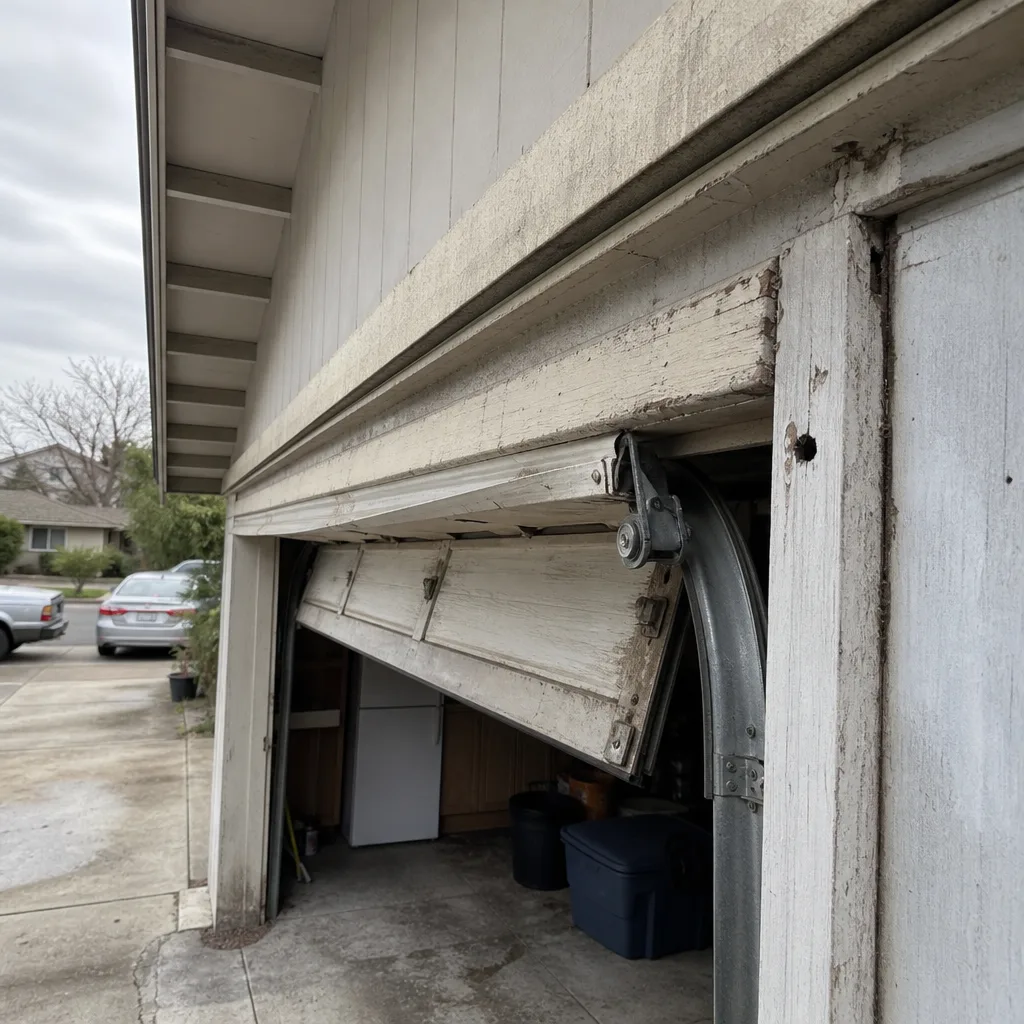 Before
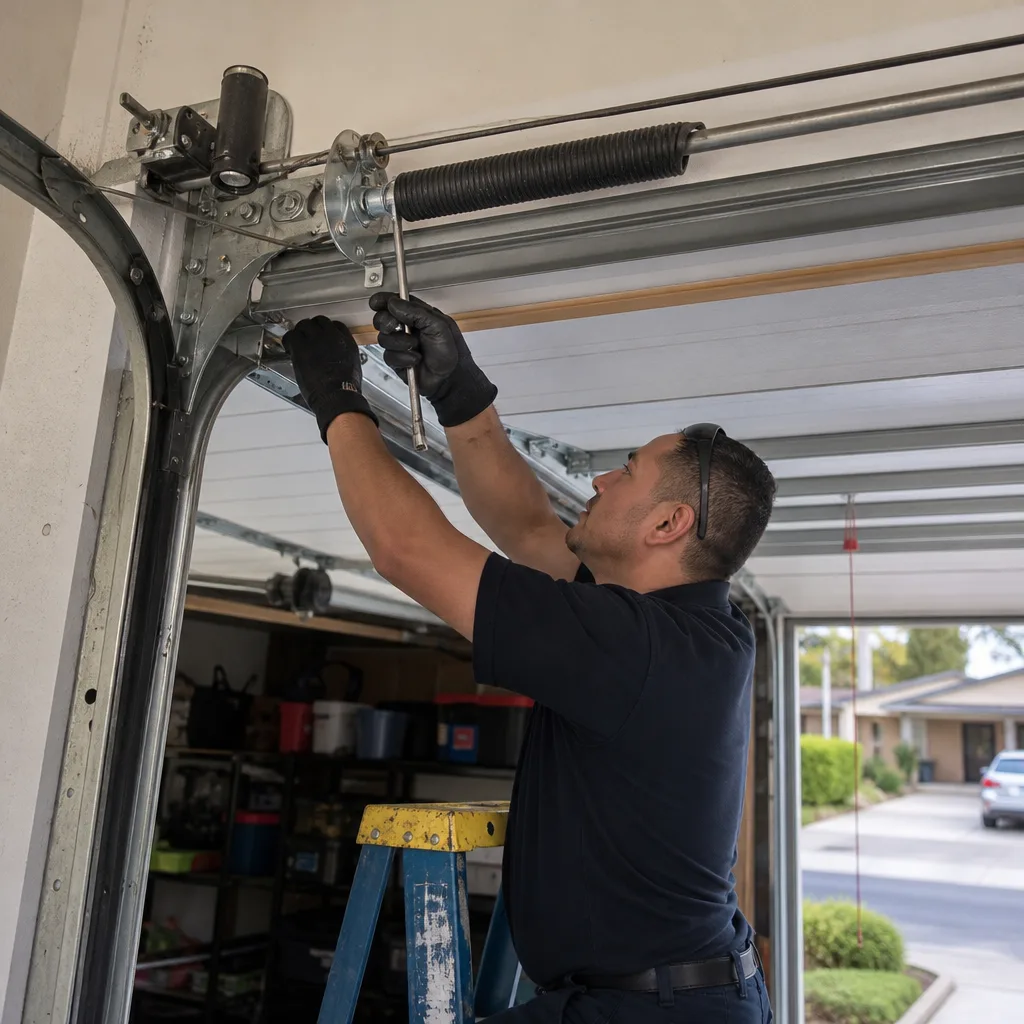 After
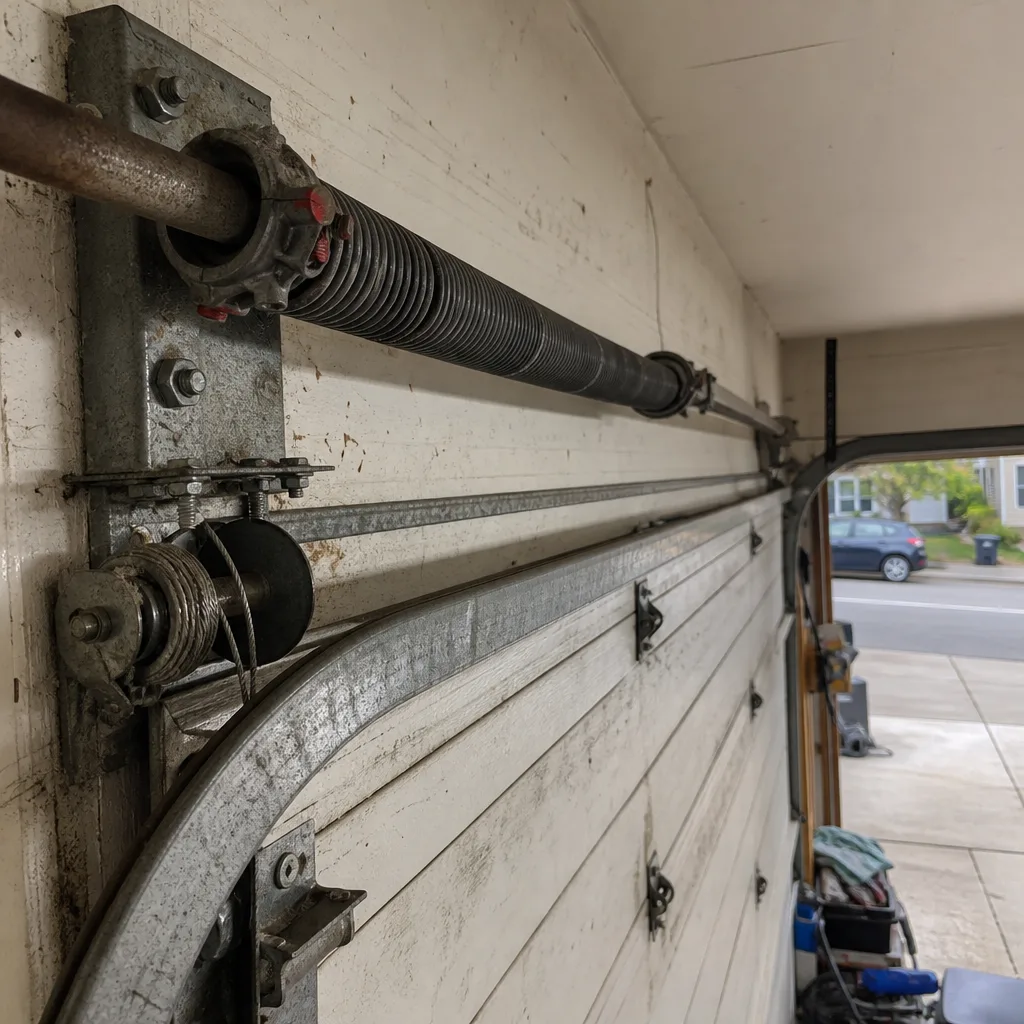 Before
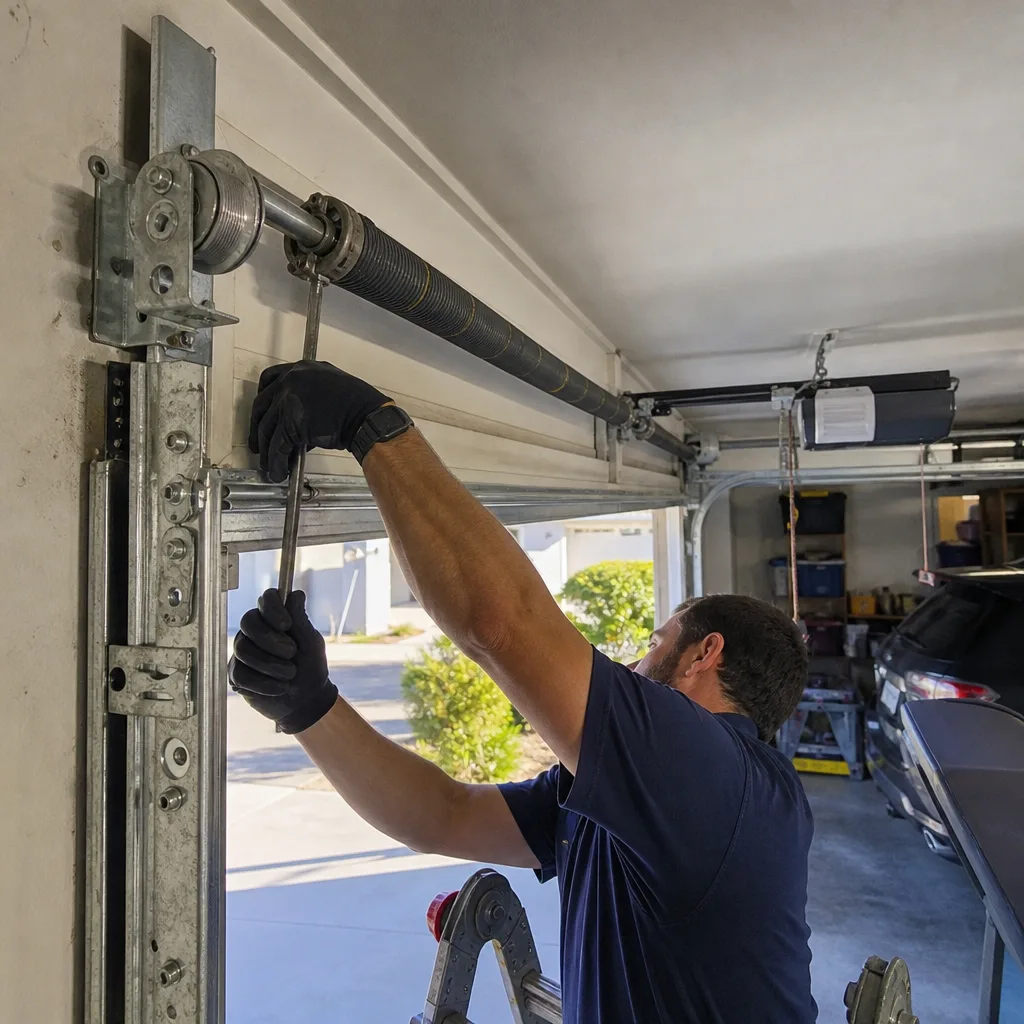 After