
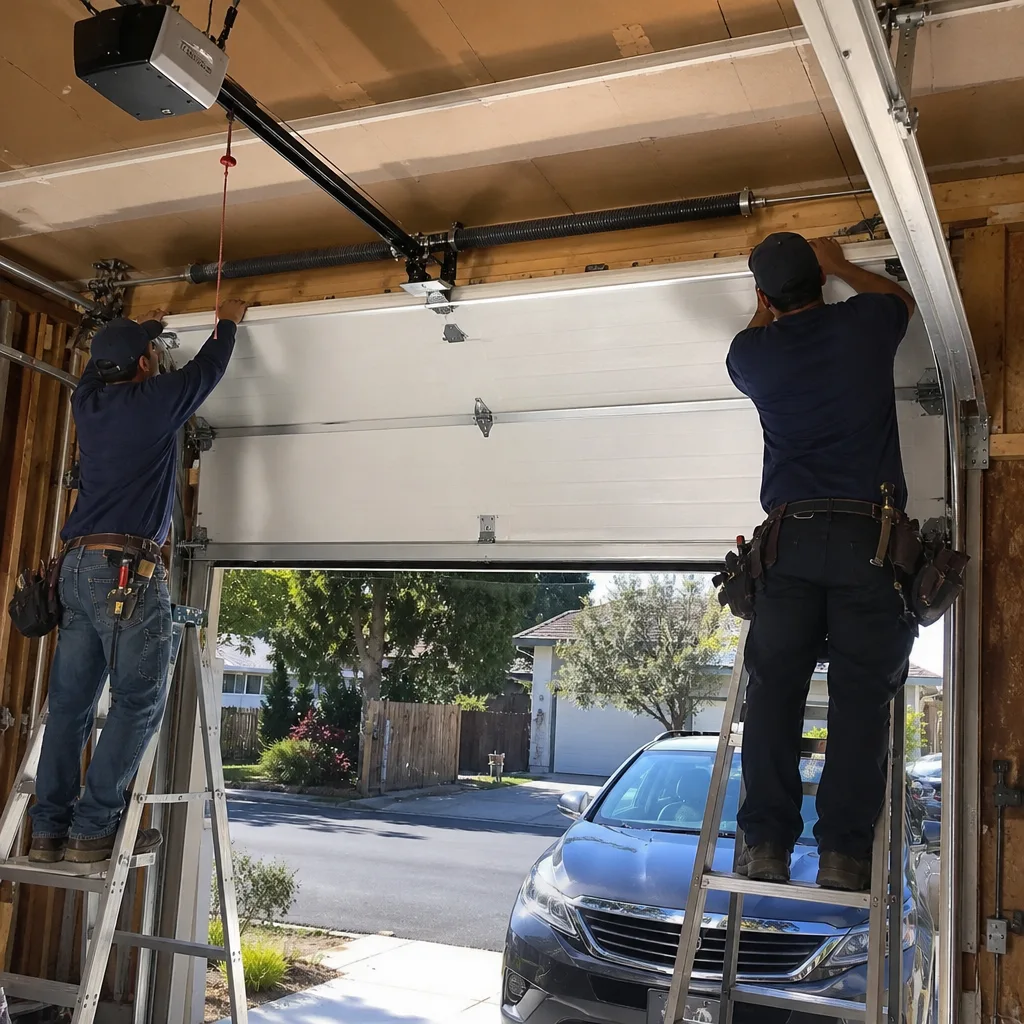
Last updated November 2, 2026
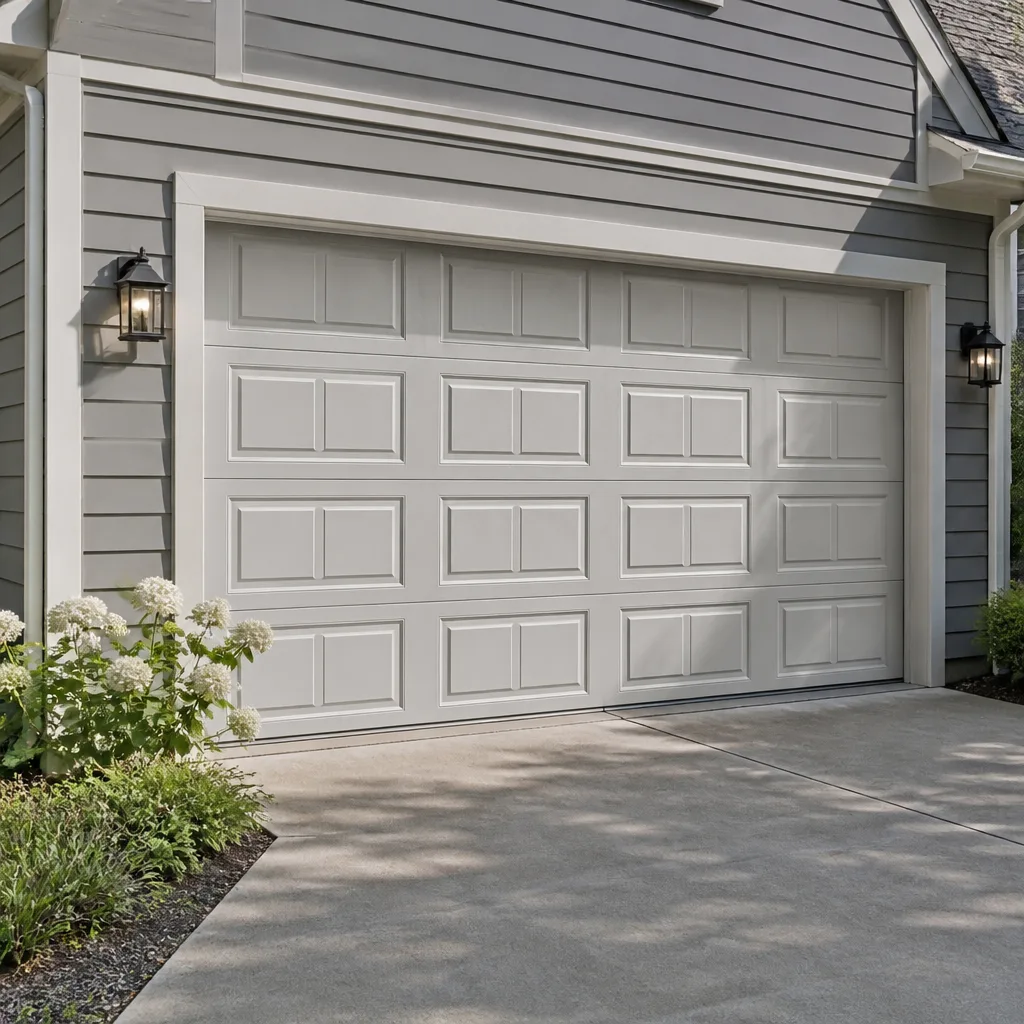 Raised-panel steel
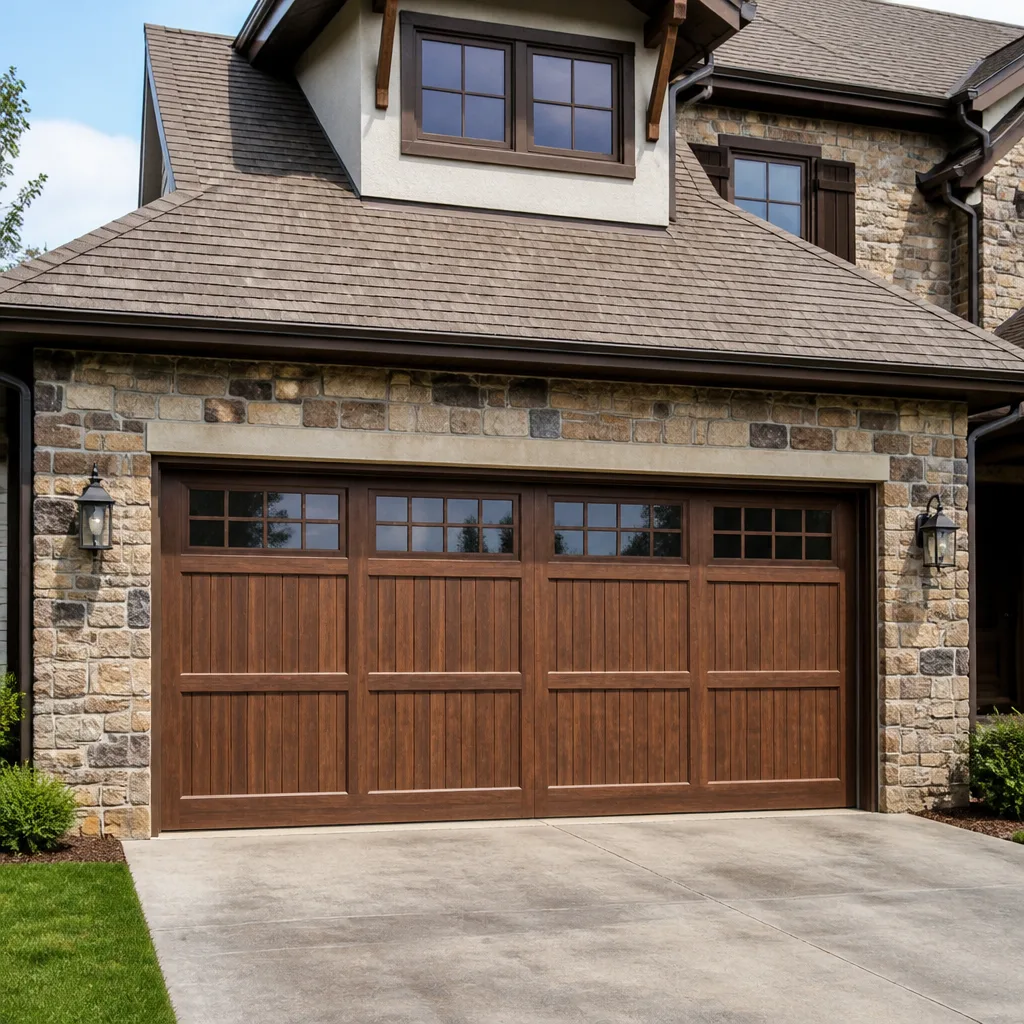 Carriage house
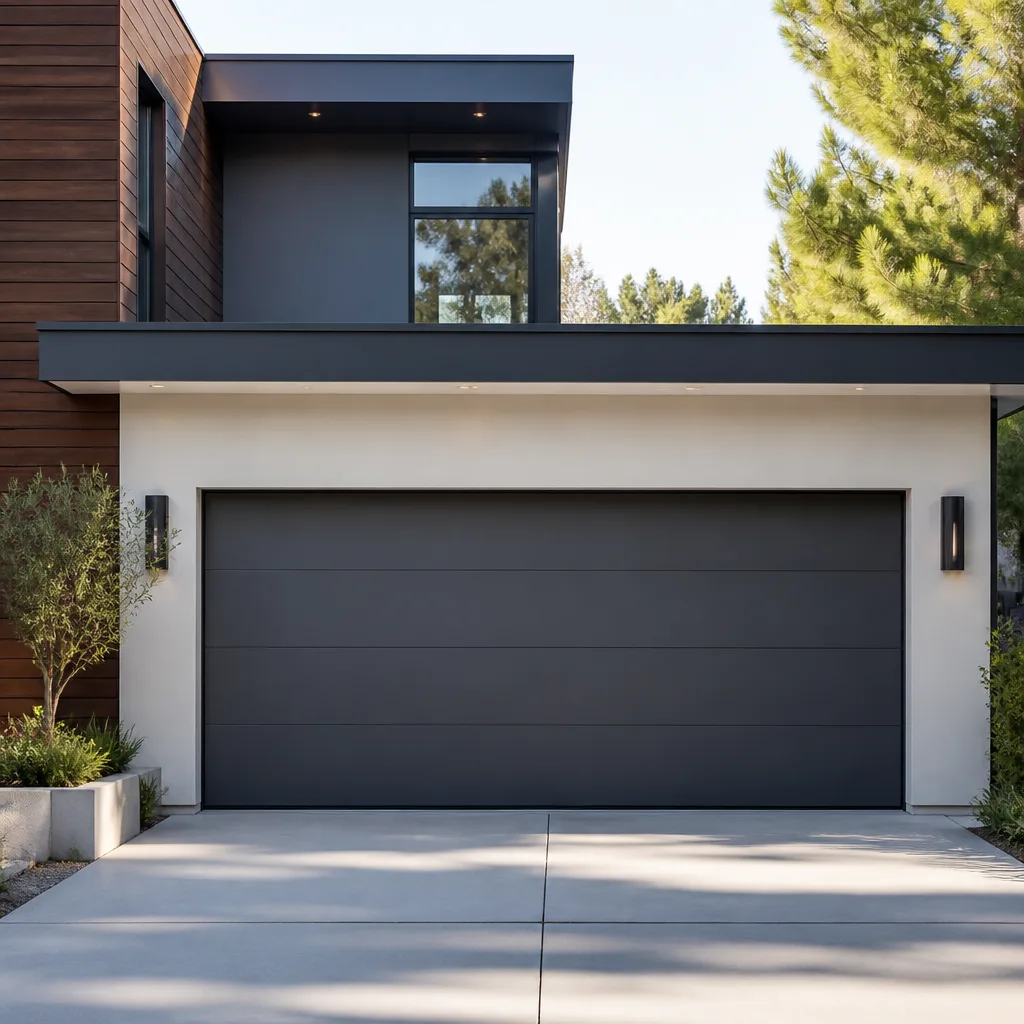 Modern flush
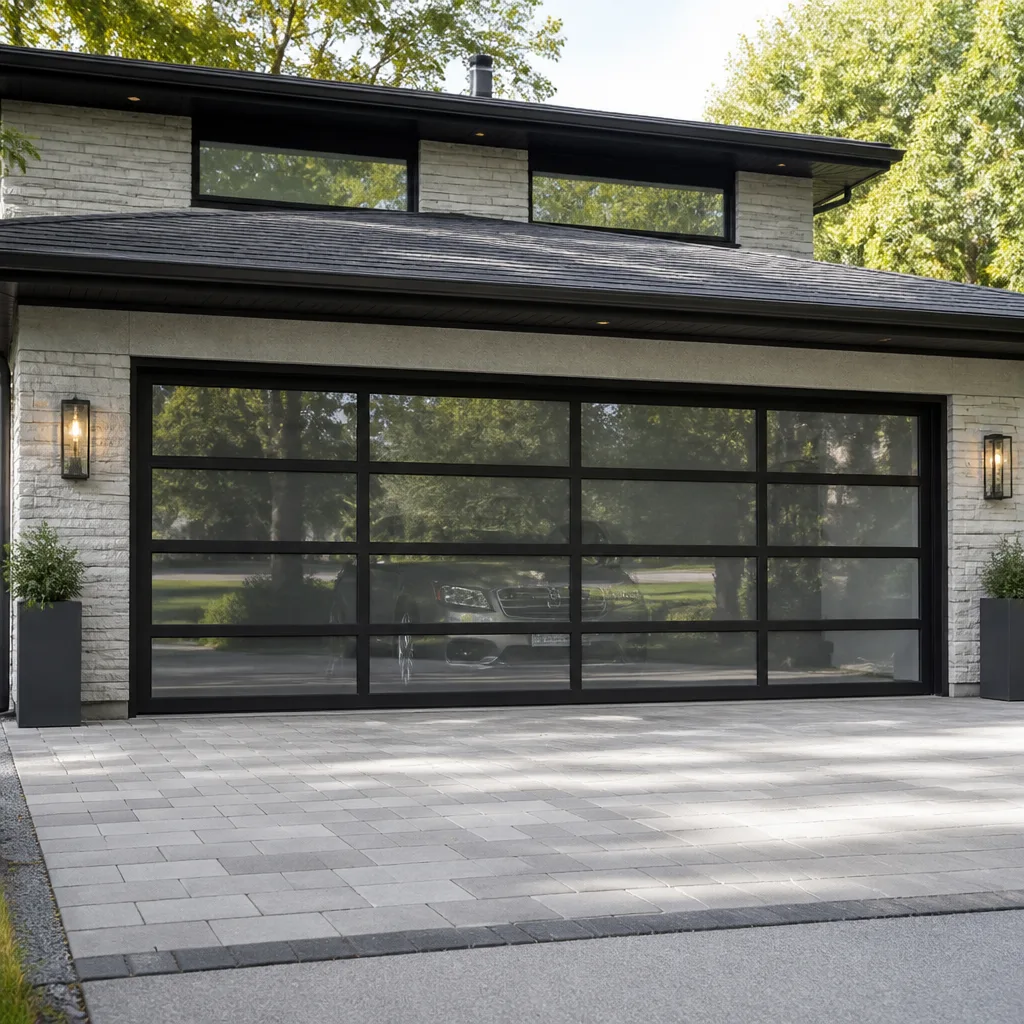 Full-view glass
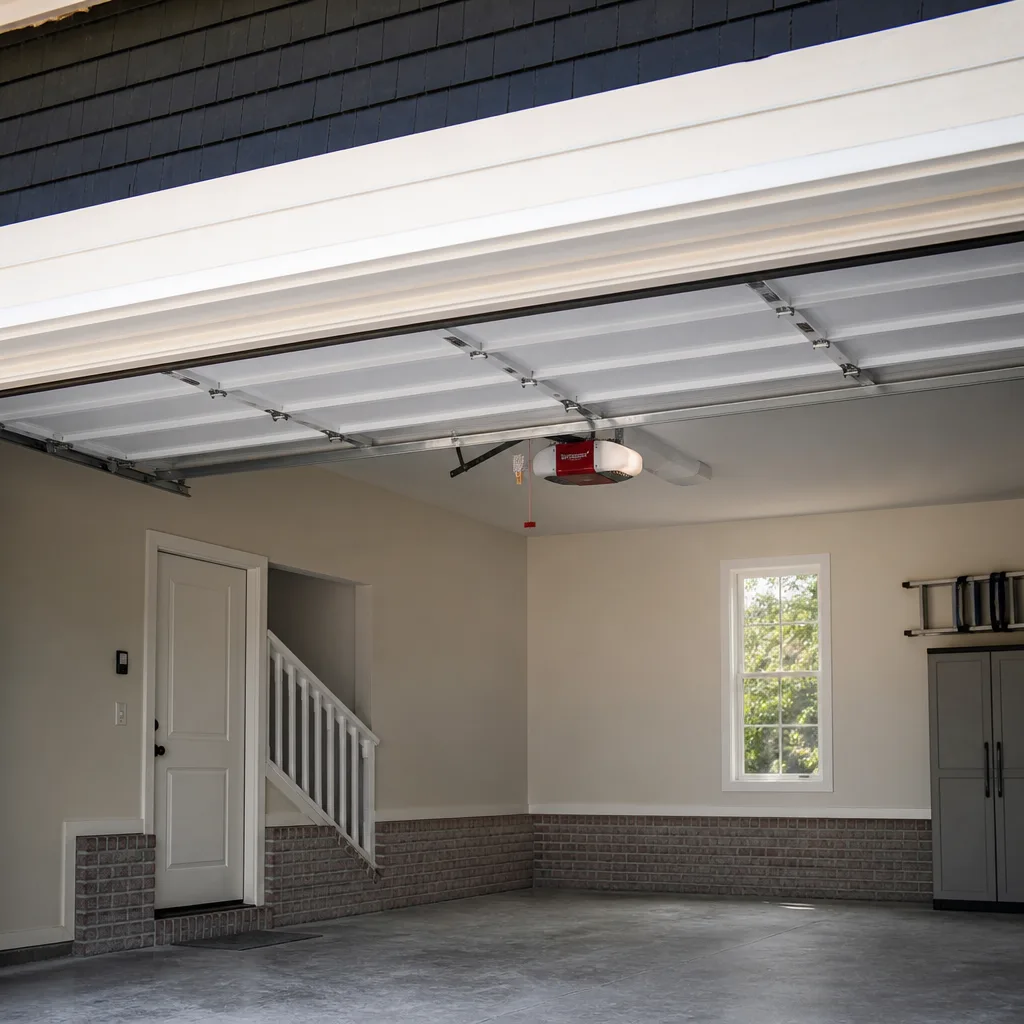 LiftMaster openers
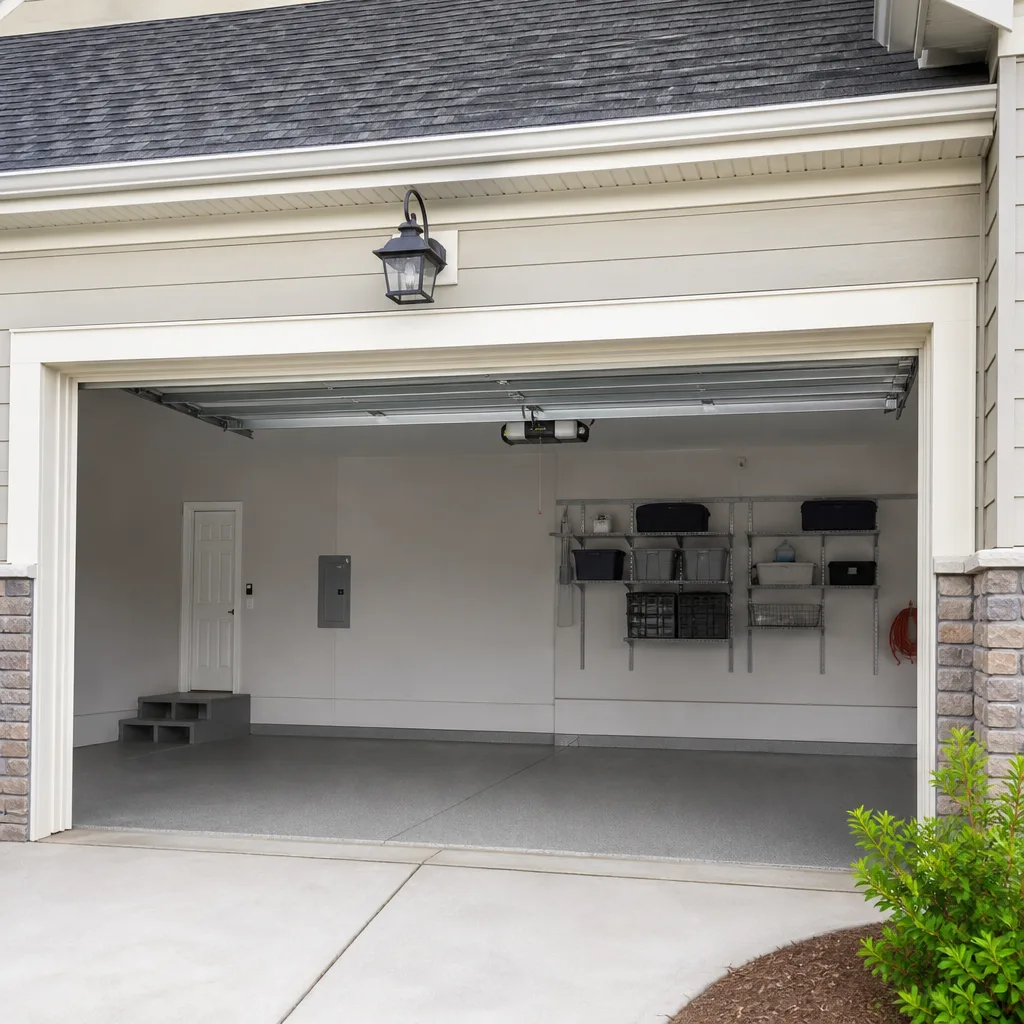 Chamberlain openers
Full 25-point door and opener safety check with every visit - springs, cables, rollers, tracks, and your LiftMaster or Chamberlain opener included
You get a price before we start. It does not change when the truck arrives.
Get your free estimateGarage Door Warning Signs: A Gilroy Homeowner’s Reference Guide
A garage door that hesitates for half a second before moving is not “a little slow.” It’s an opener working at roughly 140% of its rated load, which cuts a motor’s lifespan from years down to months. Most Gilroy homeowners don’t recognize the early signals their garage door sends, so they end up paying for a full replacement when a $40 part and a service call would have solved the problem. For more guides & resources, explore our blog. This guide organizes warning signs the way you actually experience them: what you hear, what you see, what you feel, and what you smell. By the end, you’ll know which symptoms are urgent, which are routine maintenance items, and which ones mean it’s time to pick up the phone.
Quick Answer
Garage door warning signs fall into four categories: unusual sounds (grinding, popping, squealing, banging), visual asymmetry (cables slack on one side, door leaning in the opening), physical resistance (door feels heavy when operated manually, opener strains), and smells (acrid burning odor from the motor). In Gilroy’s hot summers and occasional freeze mornings, thermal expansion and contraction accelerate spring fatigue, making seasonal inspections more important than in coastal climates. If you notice any one of these signs, a same-week service call usually prevents a larger failure.
Styles & brands we work with
- Raised-panel steel
- Carriage house
- Modern flush
- Full-view glass
- LiftMaster openers
- Chamberlain openers
Table of Contents
- The Sound Index: Seven Noises and What They Mean
- The Visual Asymmetry Test
- The Hand Test: Six Seconds to Diagnose Opener Strain
- Smell Indicators: When a Motor Is Actually Burning
- Brand-Specific Failure Signatures: LiftMaster, Chamberlain, Genie, and Amarr
- How Gilroy’s Climate Accelerates Garage Door Wear
- Common Mistakes to Avoid
- When to Call a Professional
- Frequently Asked Questions
The Sound Index: Seven Noises and What They Mean
Garage doors communicate through sound. Each noise corresponds to a specific mechanical component, and learning the difference saves you from misdiagnosing a minor roller issue as a major spring failure. Here are the seven sounds we hear most often on service calls across Gilroy, from Morgan Hill up to San Martin.
1. A sharp pop or bang from above the door
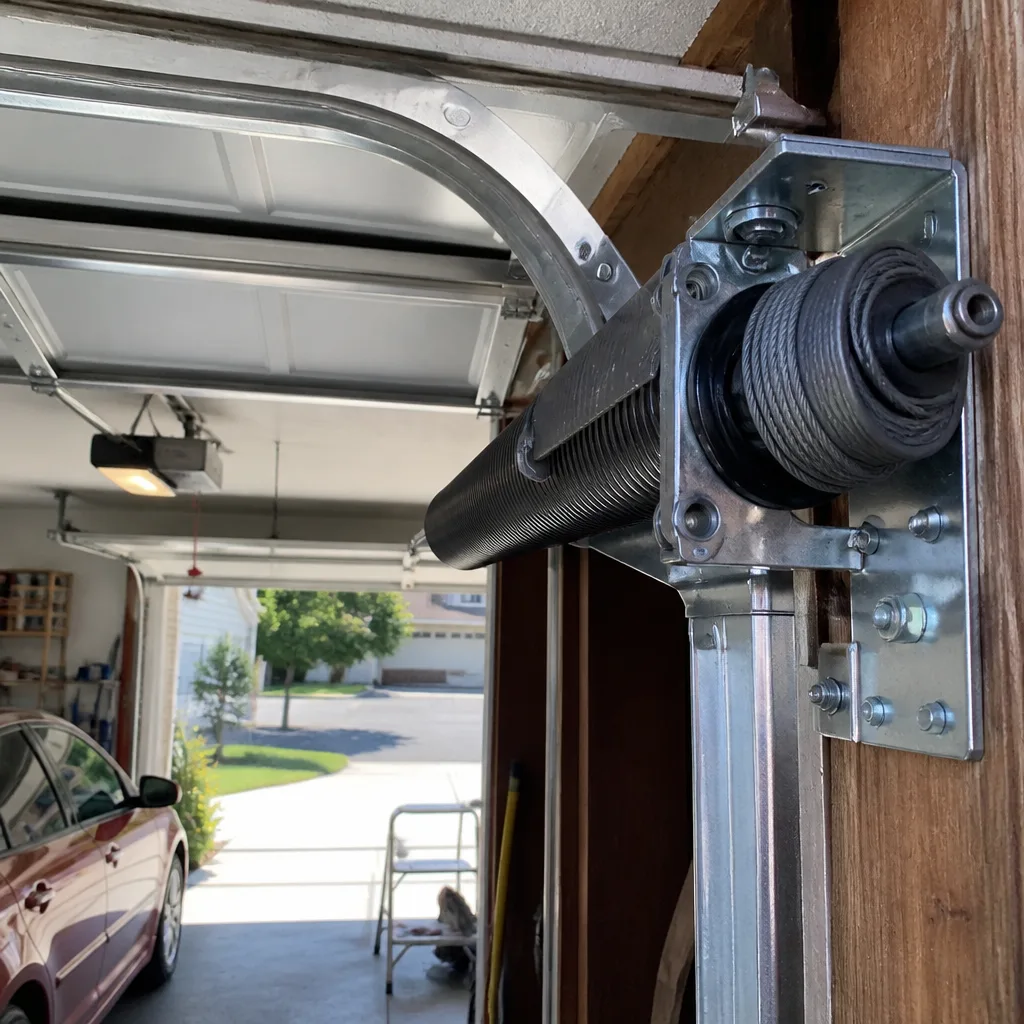
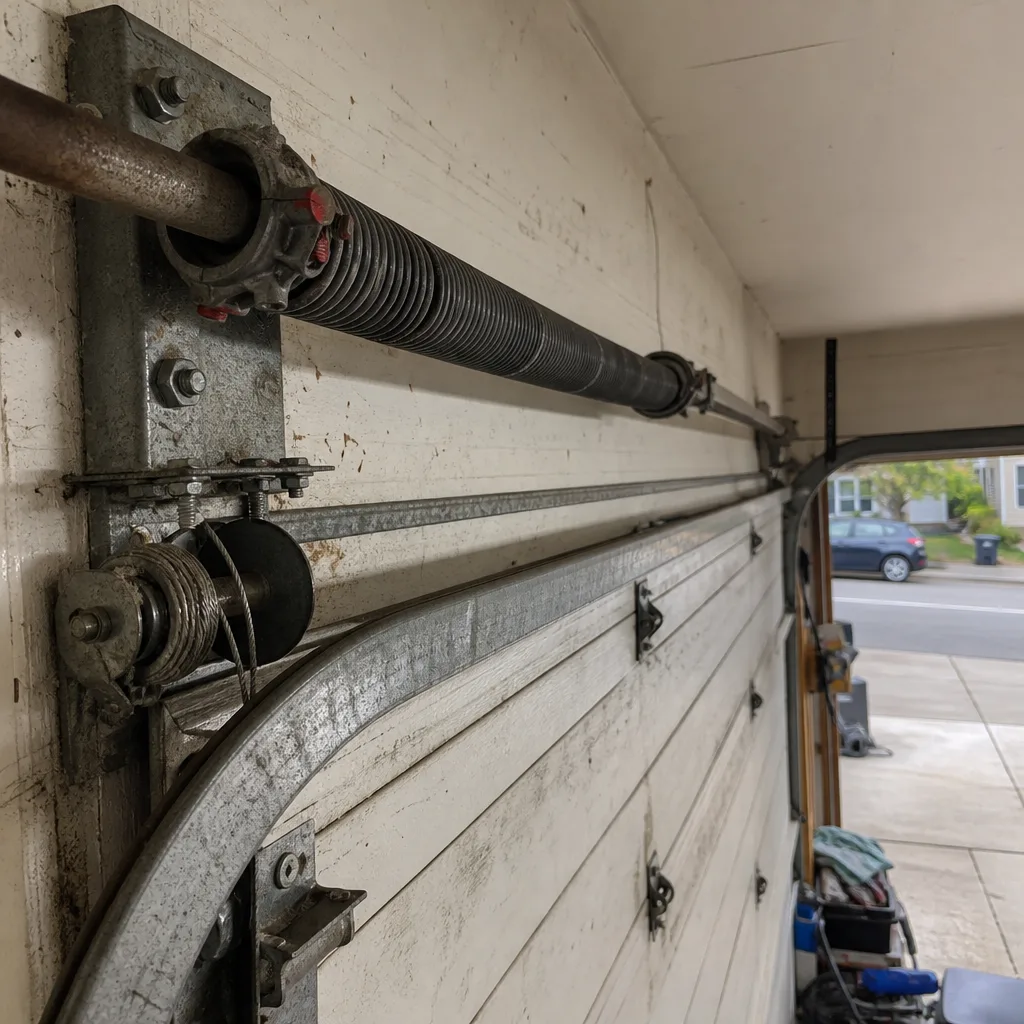
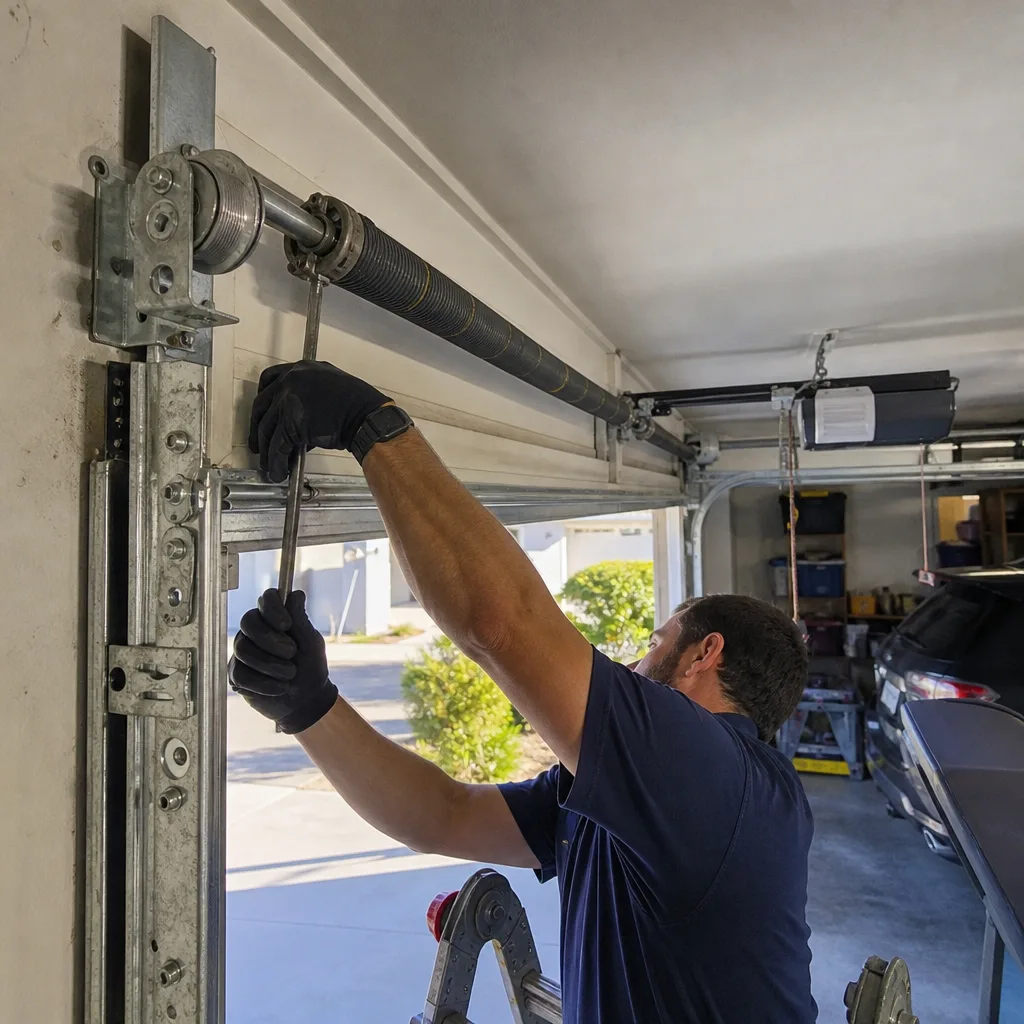
This is the torsion spring breaking. It’s unmistakably loud, like a firecracker going off inside your garage. The spring sits on a shaft above the closed door, and when it snaps, it releases stored energy instantly. If you hear this, do not attempt to open the door manually. A broken spring means the door’s full weight, roughly 130 to 180 pounds for a typical two-car door, is no longer counterbalanced. Never try to replace a torsion spring yourself. These springs are wound under extreme tension and can cause serious injury if mishandled. This is a job for a trained technician with the right winding bars and experience.
2. A rhythmic squeak or chirp every few seconds while moving
That’s a roller going dry or a hinge binding. This is by far the most common sound we hear, and it’s also the most ignored. The fix is usually straightforward: lubrication on the rollers and hinges, and in many cases, replacement of worn roller bearings. If left alone, a dry roller develops flat spots, which then creates a rumbling feel and accelerated track wear. On homes near Gilroy’s west-side orchards, dust from the agricultural fields accelerates roller wear noticeably during harvest season.
3. A grinding or gravel-in-gears noise from the opener unit
On chain-drive openers from Genie and Chamberlain, this usually means the chain has stretched or the sprocket teeth are worn. On belt-drive models, the belt itself rarely fails, but the drive gear inside the motor housing is plastic on many units and strips over time. A grinding noise from the motor area is often confused with a track problem, but track problems sound more like scraping and come from the door itself, not the motor.
4. A banging or clanking sound at the top of travel
When the door reaches its open position and bangs hard against the stop bolts, the up-limit switch is set too high or has drifted. This sends the door crashing into the opener rail, which over time bends the rail, cracks the trolley, and loosens every bolt on the system. Adjusting the limit is a five-minute fix, but it requires knowing how your specific model’s limit system works, whether that’s a mechanical screw or a digital control on a LiftMaster unit.
5. A rattling that sounds like loose change in a can
Rattling almost always means loose hardware: hinge bolts, roller brackets, track brackets, or the bolts that hold the opener rail to the ceiling. Older homes in Gilroy’s downtown district, many built in the 1950s and 60s, often have doors that predate current mounting standards, which means bracket failures are more common there than in newer subdivisions like Eagle Ridge or Glen Loma.
6. A thumping or thudding sound at regular intervals as the door travels
This is a section hinge pin that’s partially seized, or a panel that’s slightly warped and catching the track. With wooden doors from Amarr or Clopay, a small amount of panel movement is normal with seasonal humidity shifts, but a rhythmic thump suggests a specific hinge or roller is binding rather than sliding smoothly.
7. Complete silence when you press the button, but a faint hum from the motor
That hum is the motor running but not connected to the load. The cause is usually a stripped drive gear inside the motor housing, a broken sprocket, or a trolley that’s no longer engaging the rail. It’s a bad sign because continued attempts to operate the door will burn out the motor completely.
If you’re hearing any of these noises on a regular basis, Garage Door Repair in Freedom gives you an idea of how we approach diagnosing these issues, and the same process applies here in Gilroy.
The Visual Asymmetry Test
You don’t need a technician to spot a door that’s losing its balance. A level, a tape measure, and thirty seconds of observation will catch most cable and spring problems before they become outright failures.
Here’s the test, step by step:
- Close the door fully. Stand back about fifteen feet and look at the gap between the bottom of the door and the garage floor. Is it even from left to right? A difference of more than a quarter inch means something is wrong with the cables, the spring tension, or the track alignment.
- Open the door halfway. Now look at the top edge of the door relative to the opening’s header. The top edge should be parallel to the header. If it tilts more than a half inch, the door is trying to twist in the tracks.
- Check the cables. With the door closed, both lifting cables should be taut. A cable that’s slightly slack on one side indicates a spring that’s losing tension on the opposite side or a cable that’s begun to slip on the drum.
- Place a level against a vertical track. The track should be plumb, within about a quarter inch from top to bottom. Track brackets get knocked loose from routine impacts, and in Gilroy’s clay-heavy soils, seasonal ground movement can shift concrete slabs and the tracks bolted to them.
- Look at the rollers inside the track. Open the door slowly and watch each roller. A roller that’s not turning but sliding in the track is either worn flat or the bearing is seized.
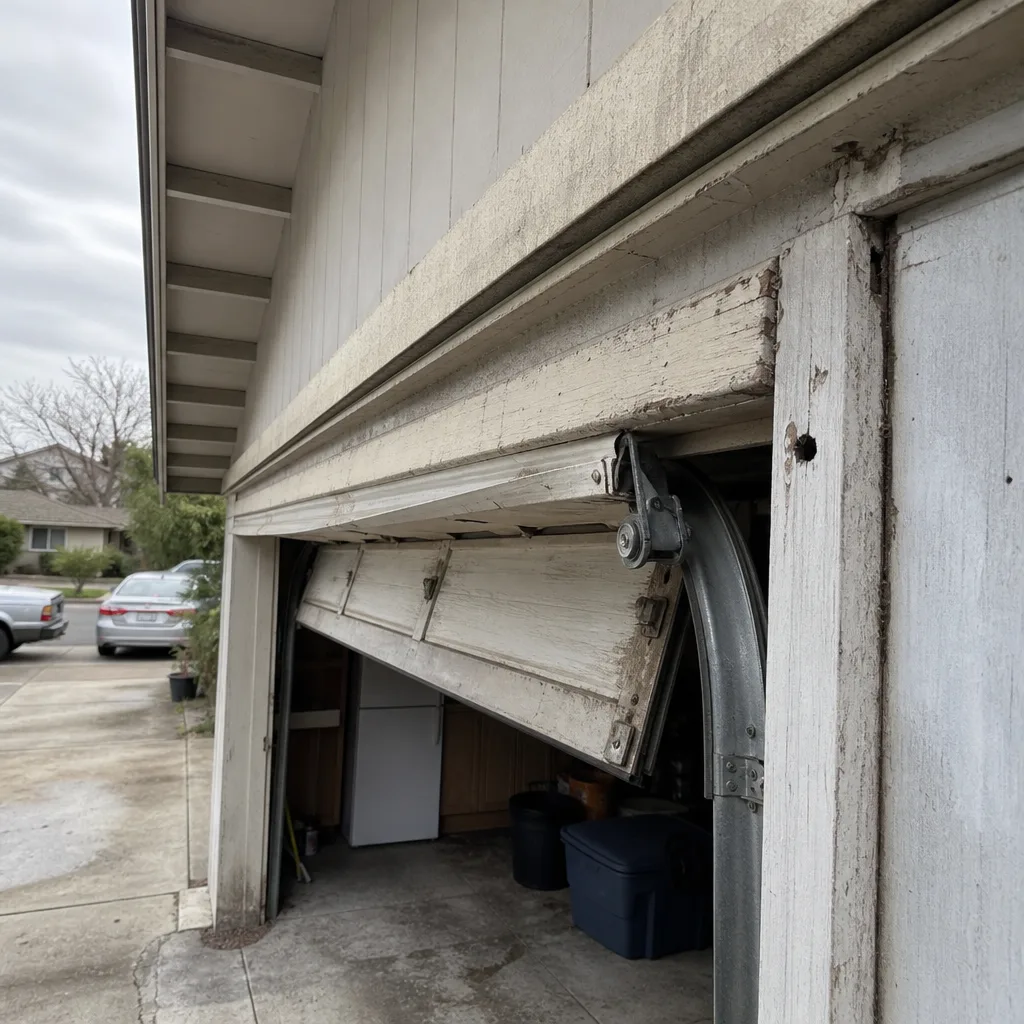
This test catches the single most expensive problem to fix: a door that falls because one cable snaps while the other holds. That drops one side of the door several feet, bends panels, shatters glass inserts, and rips tracks off the wall. We’ve seen this happen in Gilroy garages where the door was carrying an extra fifty pounds of additional hardware like insulation panels or a strut added years ago without rebalancing the springs.
Clopay and Wayne Dalton doors often come with microgroove track systems that wear differently than standard radius track. If the door hasn’t been inspected since installation, and most haven’t, the track itself may have developed a groove from the roller bearings riding on the same line for years. That groove creates a catch point that accelerates wear.
The Hand Test: Six Seconds to Diagnose Opener Strain
Your garage door opener has a nameplate rating for the load it’s designed to handle, usually marked on the motor housing. Here’s how to tell if the opener is working beyond that rating, using just your hand.
Step 1: Pull the emergency release cord while the door is closed. This disconnects the door from the opener trolley.
Step 2: Lift the door manually by the handle or bottom edge. It should rise smoothly with steady, moderate effort. A properly balanced door feels like it weighs about 8 to 10 pounds when properly counterbalanced by its springs.
Step 3: Stop lifting at waist height. Let go. A healthy, balanced door stays where you left it. If it drops more than a foot, the springs are weak or broken, and your opener has been compensating for the extra load.
Step 4: The six-second check: place your palm on the opener motor housing after running the door through a full open-and-close cycle. The housing should be warm, not hot. If you can’t keep your hand on it for more than a few seconds, the motor is running at a sustained overload and its insulation is breaking down.
When an opener runs hot like that for weeks or months, it burns through motors. On a LiftMaster or Chamberlain unit, the first casualty is usually the capacitor, then the drive gear, then the motor windings themselves. The door won’t just stop working one day; it’ll slow down, then start reversing mid-travel, then die entirely. By the time you notice, the problem is beyond repair.
A door that’s balanced but still opens slowly points to a tired motor, not a spring problem. Speed tests are easy: a standard belt-drive opener should move a door from fully closed to fully open in about 12 to 15 seconds. If yours takes 20 seconds or more, the motor is working too hard even if the door itself is balanced.
Smell Indicators: When a Motor Is Actually Burning
Two smells come from garage door openers, and they mean very different things.
Normal motor warmth smells faintly of warm metal and dust, similar to the smell from a clothes dryer running a low-heat cycle. It’s noticeable when you’re standing directly under the opener but fades as soon as you step away. This is normal, especially after heavier use or on hot Gilroy summer days when ambient garage temperatures already exceed 100 degrees.
Burning insulation smells acrid and chemical, like overheated electronics or melting plastic. It lingers in the air for minutes after the door stops moving. That smell comes from the motor’s winding insulation breaking down under heat stress. Once that insulation degrades, the motor is a fire hazard as much as a mechanical failure. If you smell this, unplug the opener or turn off its circuit breaker immediately and leave it off until a technician can open the motor housing.
We also occasionally encounter a burning rubber smell on belt-drive systems. That’s the belt riding against a misaligned pulley and shaving material off the edges. It’s not an electrical hazard, but it means the belt is being destroyed by heat and friction. On a Chamberlain belt-drive opener, this commonly happens when the tensioner spring loses its tension and the belt starts tracking off-center.
Genie openers from the older screw-drive era have a distinctive failure mode: the plastic carriage that travels along the screw melts slightly under friction and releases a plastic-ozone smell that’s easy to identify once you’ve smelled it. A new carriage is a quick fix if caught early. If ignored, the screw itself gets scored and the whole rail assembly needs replacement.
Brand-Specific Failure Signatures: LiftMaster, Chamberlain, Genie, and Amarr
One of the advantages of working on eight major brands every week is pattern recognition. Certain models fail in predictable ways, and knowing the brand often tells us what to check first.
LiftMaster
LiftMaster’s belt-drive units, particularly the 8550 and 8557 series, are durable but have a known weakness in the logic board capacitor. The symptom is intermittent operation: the opener works fine for days, then fails to respond for a few hours, then works again. Homeowners often think it’s a remote battery or wall button issue. We’ve seen Gilroy homeowners spend months replacing batteries and remotes before discovering the board itself is the problem. LiftMaster’s myQ smart openers add another failure mode: Wi-Fi module lockup, which requires a board reset rather than a full replacement.
Chamberlain
Chamberlain and LiftMaster are manufactured by the same parent company, and many internal parts cross over. But Chamberlain’s consumer-line chain-drive models use a plastic drive gear that strips on a predictable schedule, usually around the 7- to 10-year mark depending on use. The symptom is a motor that runs but the door doesn’t move, often accompanied by a grinding noise. Replacement takes under an hour for a technician familiar with the gearbox, and it’s one of the most cost-effective repairs in the trade compared to replacing the whole unit.
Genie
Genie openers have a distinctive symptom when the RPM sensor or encoder fails: the door moves a few inches, stops, then reverses as if it hit an obstruction. Homeowners often assume something is physically blocking the door. In reality, the opener has lost its ability to track motor speed and position, so it defaults to safety-stop behavior. It’s repairable, but it requires a technician who understands Genie’s speed-sensing feedback loop rather than one who only knows the basics of limit-switch adjustment.
Amarr
On the door side, Amarr’s steel doors are generally excellent, but their torsion spring life is typically shorter in high-cycle use applications. A door that’s opened and closed four or more times per day, common in Gilroy households with multiple drivers and commuters heading over Highway 152 or up to San Jose, wears standard springs out inside five years. Amarr offers a high-cycle spring option rated for 25,000 cycles, but most homes have standard 10,000-cycle springs. When the door starts feeling heavy at the midpoint of travel, that’s the spring fatigue signal.
For a deeper look at what’s involved in correcting these problems, our Garage Door Opener Repair in Freedom page explains the process we follow, which mirrors our Gilroy approach.
How Gilroy’s Climate Accelerates Garage Door Wear
Gilroy sits in a fog-influenced valley that runs hot in summer and drops near freezing on winter mornings. That temperature swing matters more than most homeowners realize.
Metal springs, tracks, and cables expand when hot and contract when cold. A torsion spring on a July afternoon in Gilroy, when garage temperatures can reach 115 degrees, is measurably different from the same spring on a January morning at 34 degrees. A spring that’s properly tensioned for summer heat will be slightly too tight in winter, and that extra tension accelerates metal fatigue. The process is slow, but it’s why springs that “should” last 10,000 cycles sometimes snap after 6,000 or 7,000 in this climate.
Humidity and coastal fog that drifts up from Monterey Bay also contribute to hinge and roller corrosion, especially on older doors without stainless hardware. Homes in the neighborhoods east of 101, where fog tends to linger longest in the mornings, often show more corrosion on door hardware than homes on the west side.
Dust is a separate factor. Gilroy’s agricultural roots mean airborne soil particles from tilled fields and orchard maintenance settle on everything, including garage door tracks and opener rails. That dust mixes with factory lubricant to form a paste that thickens over time and creates extra resistance. A dry, dusty track makes the opener work harder, which accelerates motor wear. We recommend re-lubricating rollers and hinges twice a year in Gilroy: once in March, before summer heat arrives, and once in October, after harvest-season dust has settled.
One more local factor: soft clay soil. Gilroy’s adobe clay expands and contracts with moisture content, which shifts concrete slabs over time. Garage floors and foundations in older neighborhoods move enough to throw door tracks slightly out of alignment, even when the door itself is fine. If your door catches or rubs in the same spot every time and it’s not a roller issue, check the track alignment; a quarter-inch foundation shift can cause a half-inch track misalignment by the time it translates up the wall.
Our full picture of how we handle regional repair work across this part of the state is on the Garage Door Service Gilroy home page.
Common Mistakes to Avoid
- Continuing to use a door that makes unusual noises. Every cycle with a dry roller or failing hinge adds accelerated wear to the tracks, panels, and spring. A $25 roller replacement can turn into a $400 spring and cable job when the imbalance finally catches up.
- Lubricating the wrong parts. Spraying lithium grease on a tor torsion spring is a waste of time, and spraying WD-40 into roller bearings washes out the factory lubricant rather than adding to it. Only the roller bearings, hinge pins, and tracks should be lubricated, and only with a garage-door-specific lubricant, not general-purpose spray.
- Ignoring a door that reverses mid-cycle. Many homeowners assume a door that reverses is “just being safe.” It often means the force settings are off, the RPM sensor is failing (common on Genie units), or the door is off balance. Each of those gets worse with continued use.
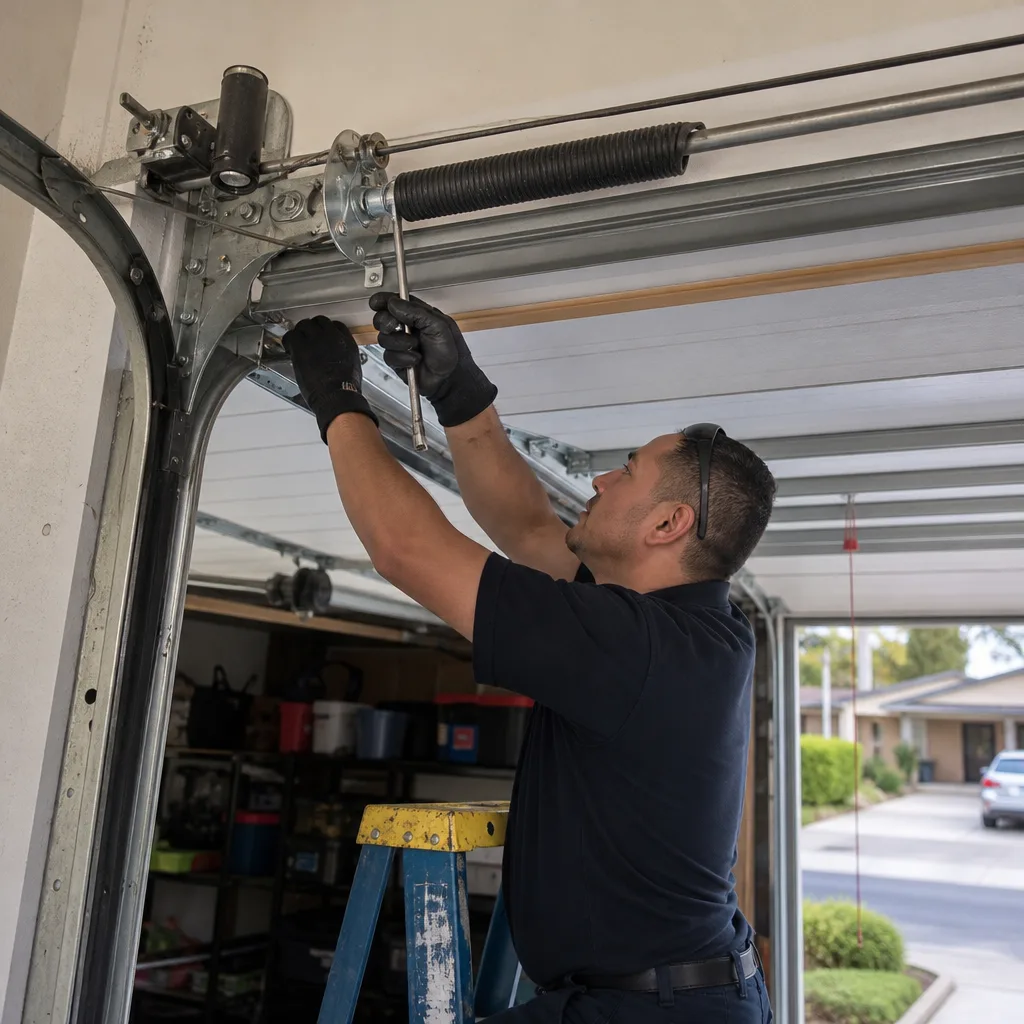
- Adjusting spring tension without proper tools. Torsion springs store enormous energy. A slip of a winding bar can break fingers, wrists, or worse. This is the single most dangerous DIY project in home repair and accounts for thousands of emergency room visits nationally every year. If the spring tension is wrong, call a professional.
- Replacing the opener when the door is the problem. A tired motor is often the symptom, not the disease. If the door is unbalanced and the opener has been compensating for years, a new opener will just burn out the same way the old one did. Diagnose the door first.
- Waiting until the door won’t open to call. When a garage door fails completely, it usually happens with the door down and a car trapped inside. By the time it’s an emergency, the repair options are limited to whatever’s available on short notice, which often means paying more for less choice.
- Assuming a new house means a healthy door. Builders install doors that meet minimum specifications, not premium ones. A five-year-old home in a Gilroy subdivision can have a door that’s already a few thousand cycles into a standard spring’s lifespan. If the previous owner never serviced it, the door is due for inspection regardless of age.
When to Call a Professional
Some problems are worth checking yourself. A loose hinge bolt, a dry roller, or a wall button that needs a new battery are all things a homeowner can handle in minutes. But if any of the following apply, call a professional before the door fails completely.
You need a professional if: the torsion spring is broken or visibly sagging; the door drops more than a foot when released manually; the opener motor housing is too hot to hold your hand on; you smell burning insulation from the motor; a cable is frayed or slack; the door is visibly leaning in the tracks; the door reversed without hitting anything, and it keeps repeating the behavior; or you’ve adjusted the force settings and the door still won’t operate correctly.
Garage Door Service Gilroy offers free estimates in Gilroy and surrounding areas. Call (833) 593-6706 and we’ll send someone out to diagnose the problem, explain what’s wrong in plain language, and quote the repair before any work begins.
Frequently Asked Questions
Garage door spring replacement in Gilroy typically runs between $180 and $340, depending on whether you have a single torsion spring, a double spring system, or an extension spring setup. The final quote depends on the spring’s size, cycle rating, and whether we also replace the cables and bearings at the same time. Call (833) 593-6706 for an exact quote, and we’ll give you the price before starting any work.
Yes, we can diagnose a garage door problem the same day in most cases in Gilroy. Initial diagnosis calls are scheduled as quickly as possible, and because our trucks carry parts for all eight brands we service, including LiftMaster, Chamberlain, Genie, Clopay, Amarr, Wayne Dalton, Craftsman, and Raynor, many repairs are completed in a single visit. Call us to check today’s schedule.
A garage door that drops after opening means the springs are no longer counterbalancing the door’s weight, which forces the opener to work significantly harder and will eventually break either the gears or the motor. The cause is usually a spring that’s lost tension or is nearing the end of its cycle life. It’s repairable, but the door should not be used until it’s rebalanced to prevent further damage.
An opener that works intermittently in Gilroy usually has one of three problems: a failing capacitor on the logic board (common on LiftMaster models), a Wi-Fi module that’s locked up and needs a board reset, or a door that’s off balance and tripping the opener’s force-sensing overload protection. We can isolate which issue you’re dealing with and quote the repair before we start.
Yes, our service trucks carry parts for the brands we service, including Genie and Amarr. That means most repairs are completed the same day as the diagnosis, without a second trip to a supplier. If a specialty part isn’t on the truck, we can usually have it in stock within a day or two and finish the job as soon as it arrives.
In Gilroy’s climate, we recommend servicing a garage door every 18 to 24 months, which includes spring inspection, cable inspection, roller and hinge lubrication, track alignment check, and a full balance test. Homes with more than two daily door cycles or doors that face west and take full afternoon sun may need annual checks instead. Early service catches small problems before they become failures.
The Bottom Line
Garage doors don’t fail without warning. They warn with sound, with visible asymmetry, with physical resistance, and with smell. The key is paying attention before a minor annoyance becomes a breakdown that traps your car in the garage or forces a full replacement. If you’ve noticed any of the signs in this guide, or if you simply haven’t had the door inspected since you bought the house, start with a professional diagnosis. It costs nothing to have us look at the door and tell you what’s actually going on. For installation work down the road, our Garage Door Installation in Freedom page explains how we approach new-door projects, and the same process applies throughout the Gilroy area.
Written by the team at Garage Door Service Gilroy, serving Gilroy since 2018.
See the difference
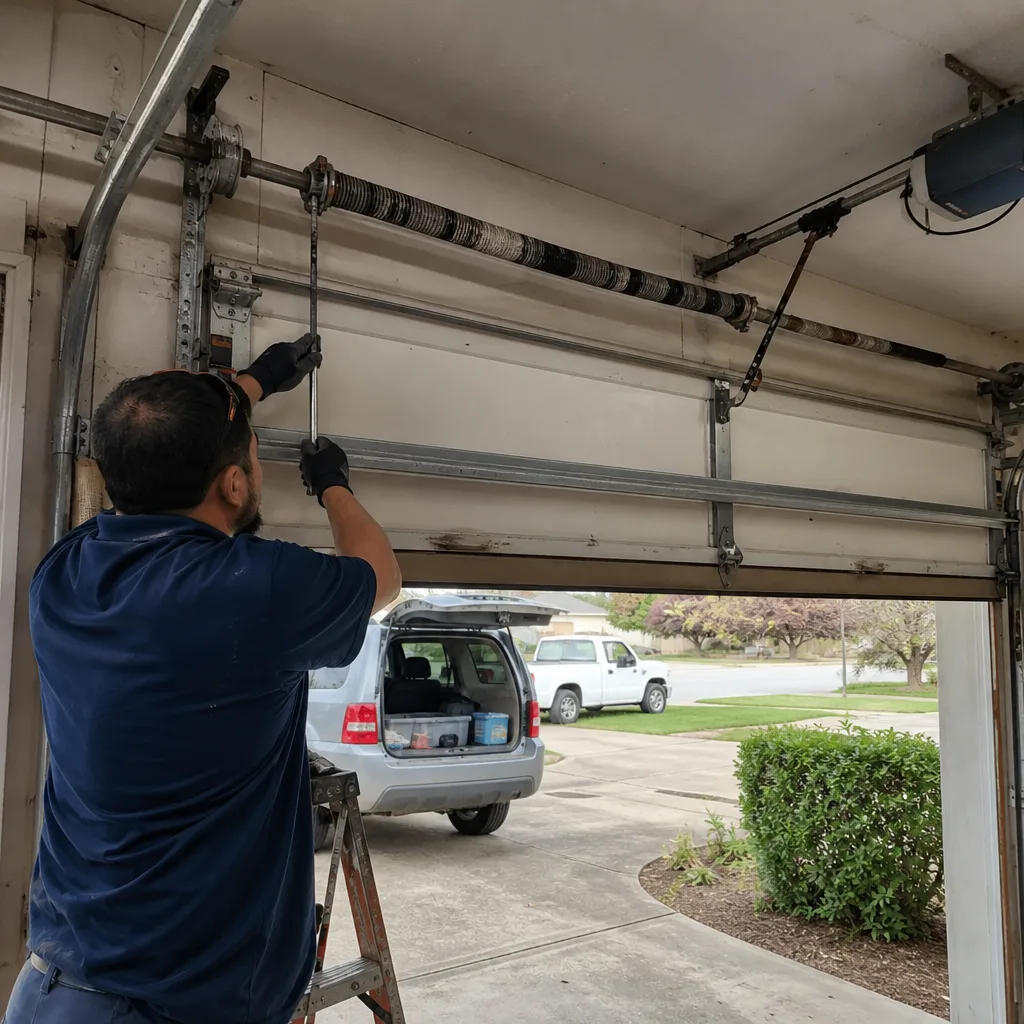 Before
 After
 Before
 After
 Before
 After